This year has been like a roller coaster for farmers. The whims of the weather and drought were offset by rising crop prices, but during the harvest, fuel prices caused a stir. Due to disruptions in supply chains, equipment was halted because of late parts, or machines ordered for the season arrived with significant delays. And, of course, there’s the recent uproar over fertilizer prices and availability.
We would like to recommend two machines to farmers that can make work easier and more cost-effective.
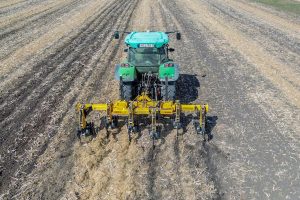
One is a Rotary Seedbed Maker, which can create a perfect seedbed in one pass, whether the soil is hard and cloddy or wet and sticky.
During spring seedbed preparation, we can face two problems: too much rainfall or none at all. If the soil is wet, only the shallow, dry surface layer should be worked. If we dig into the wet soil, we create sticky clods. The rotary hoe’s adjustable rotor allows precise depth control. Its special finishing rollers do not clog in wet spots. The Busa rubber roller compresses while rolling, shedding the adhered soil, while the internal cleaning lattice clod breaker with its spring cleaner saves us from half a day’s cleaning.

Why is it worth investing in such a machine?
Besides being available in large working width versions, which, combined with high working speed, results in a fast work process, we can also save fuel since we don’t need to go over the field 2-3 times for a perfect seedbed. From another perspective, its outstanding clod-crushing capability can replace up to four passes with traditional machines. The BUSA Rotor ensures increased crop yield and yield security for timely sown crops, with high operational reliability, long service life, and low operating costs. According to farmers, those who were able to sow early after using the BUSA Rotary Tiller avoided significant losses this year.
Another useful machine of ours is the BUSA Injector, which utilizes liquid fertilizer more efficiently compared to surface fertilizer spreaders. After all, there’s one thing worse than the rising price of fertilizer, and that’s if the fertilizer doesn’t get utilized at all! Granulated fertilizer does not become available until it receives moisture. But what happens if the liquid fertilizer evaporates? Considering that late spring temperatures often reach 30 degrees Celsius, and the crop cover does not yet shade the soil, making it warm as well, it is easy to see that liquid fertilizer applied near the surface can very easily evaporate.

Let’s not throw our money out the window!
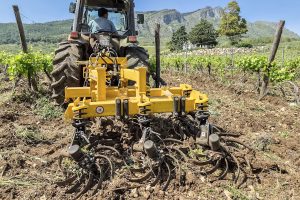
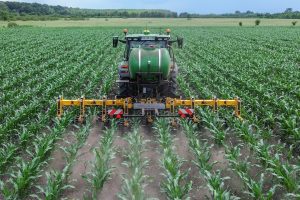
That’s exactly why we developed our Injector machine, which injects liquid fertilizer 8-10 cm deep, close to the plant roots. The BUSA Injector is equipped with a unique lifting mechanism, allowing the machine to lift itself, preventing damage to large plants both in the row and during turns.
Currently, the Busa injector range includes the following:
Frame: Single or twin beam, available in widths of 4.5 m (6 rows), 5.7 m (8 rows), and 8.2 m (12 rows).
Tank: Single or double, with capacities of 660 or 1100 liters.
Spring-loaded disc injector: Available in the required number.
Pump: PTO-driven diaphragm or roller in various sizes, or optionally electric or hydraulic motor versions.
Nozzles: We use a wide range of nozzles for all configurations, and the machines are equipped with visual flow indicators. The application accuracy is ensured by a controller using GPS-based speed signals.
Fortunately, the capacity of smaller Hungarian machine manufacturers has not been drastically reduced by the raw material shortage, as can be heard from abroad, thanks to domestically produced parts. However, it is still worth planning purchases well in advance, as the waiting list increases everywhere after the evaluation of ongoing machine tenders.