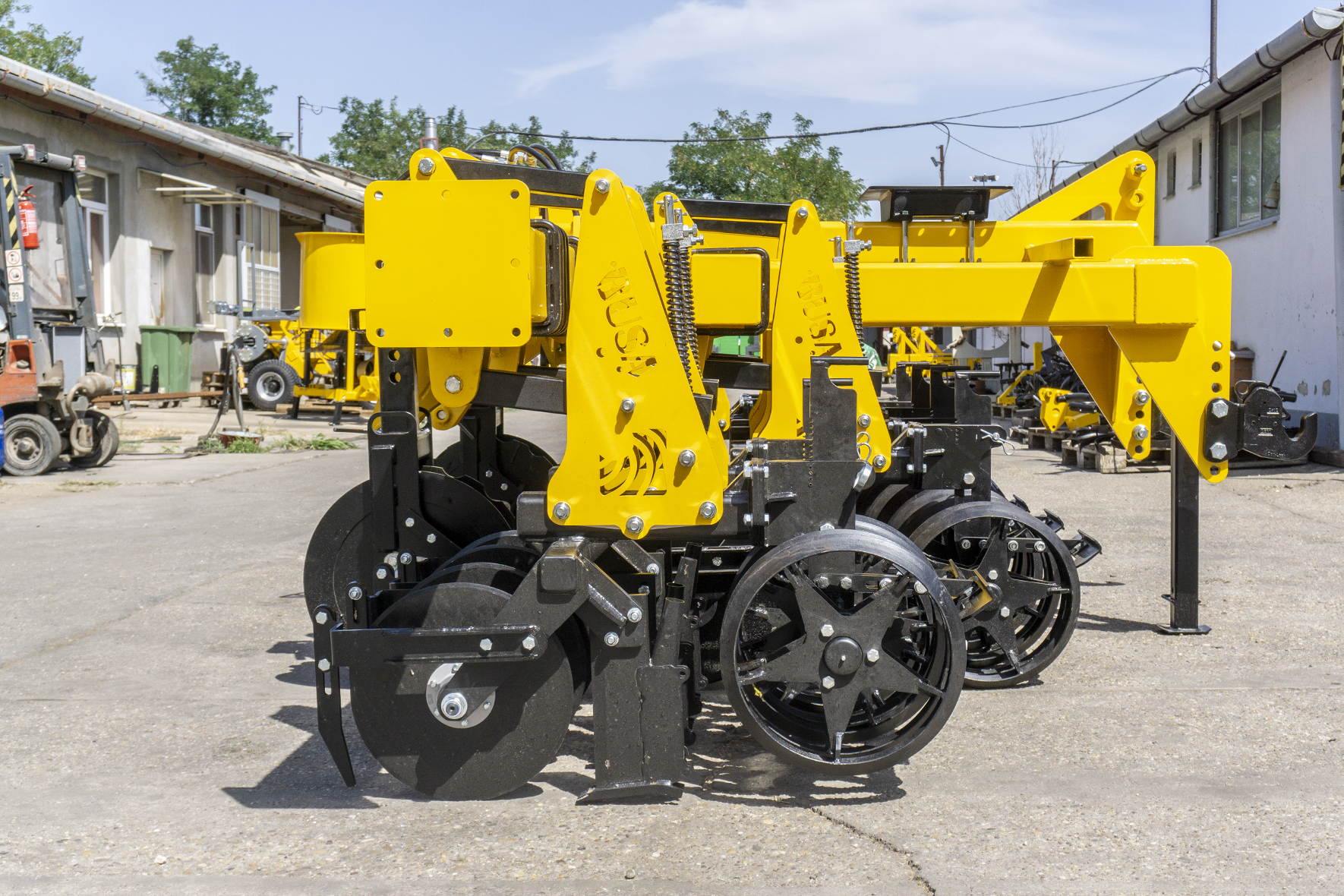
The 2026 drought demands a technological shift, while the economic environment makes High‑End solutions unreachable for many farmers. In this uncertainty, every step must be taken cost‑effectively.
The BUSA R‑SeedR can be a straightforward, accessible entry point into the world of direct seeding in its simplest form.
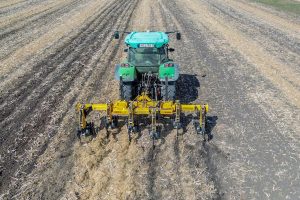
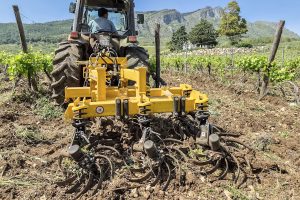
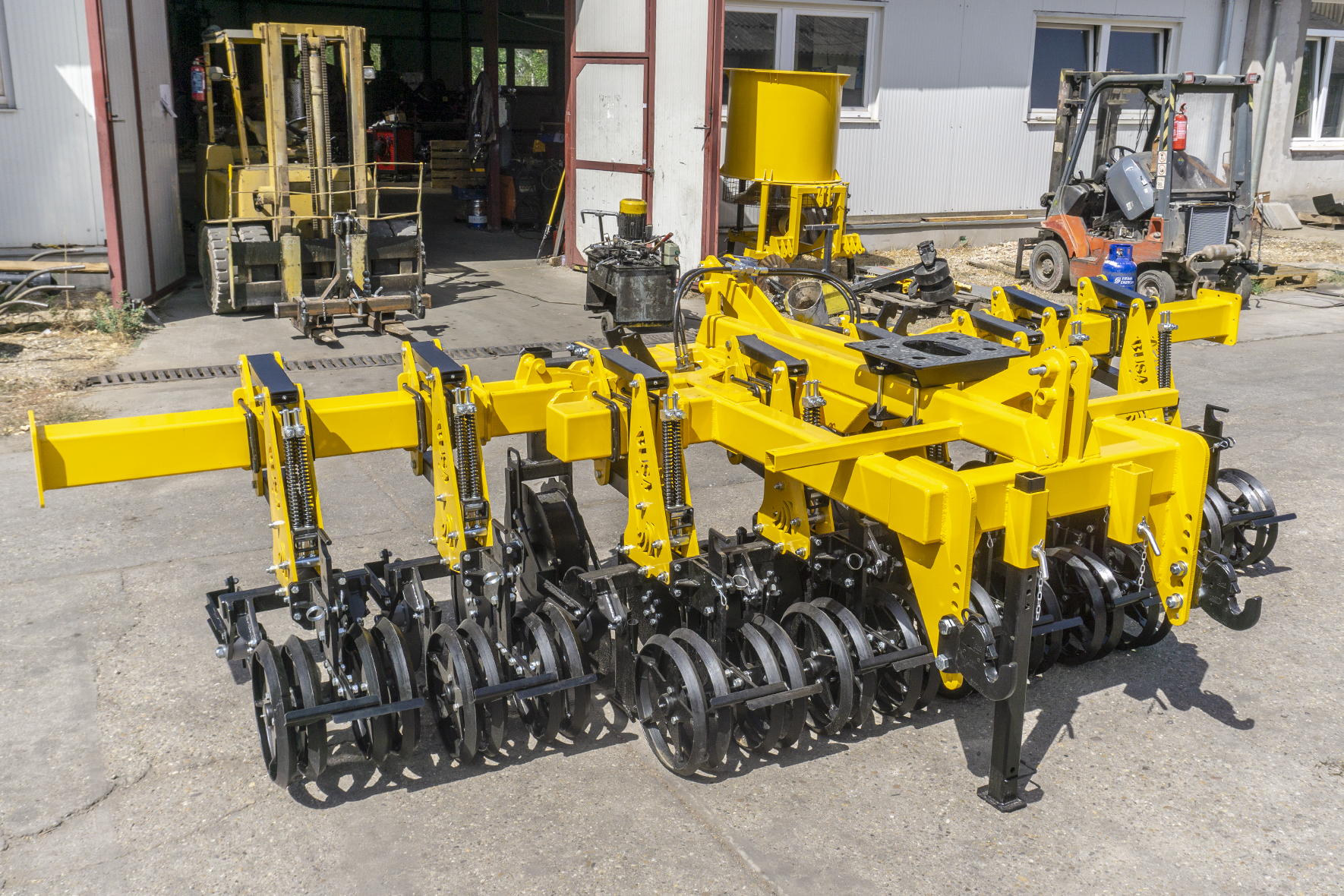
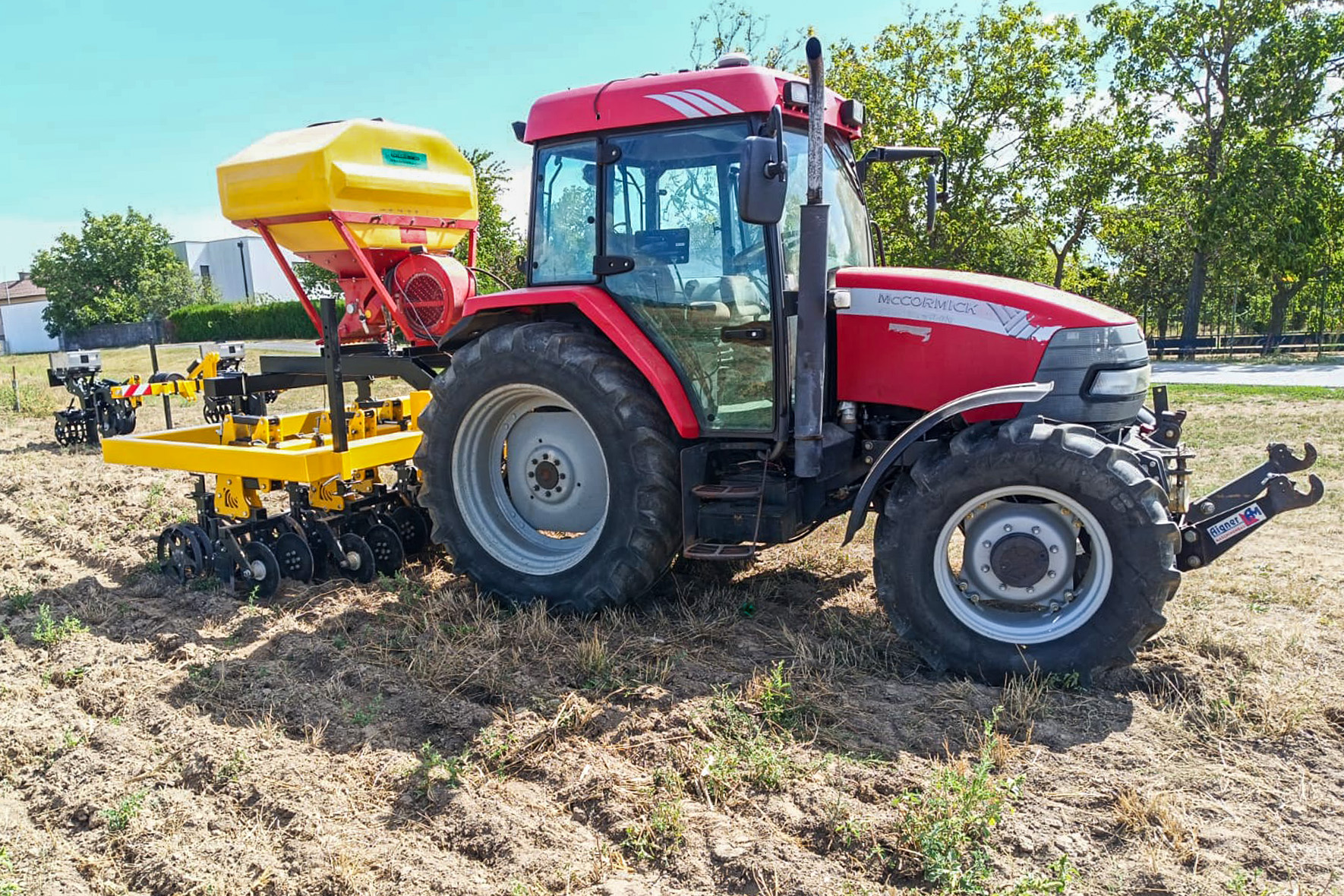
First, we designed a band‑seeding, under‑seeding, side‑seeding tool. Our goal was to sow into the inter‑row space between 75 cm main‑crop rows. That’s how we ended up building a pair of 25 cm seeding units onto 75 cm‑spaced row units. Then, of course, came the request to place the units at 50 cm spacing — and suddenly it became a wide‑row cereal drill. These machines were built on simple toolbar‑type cultivator / Strip‑Till frames.
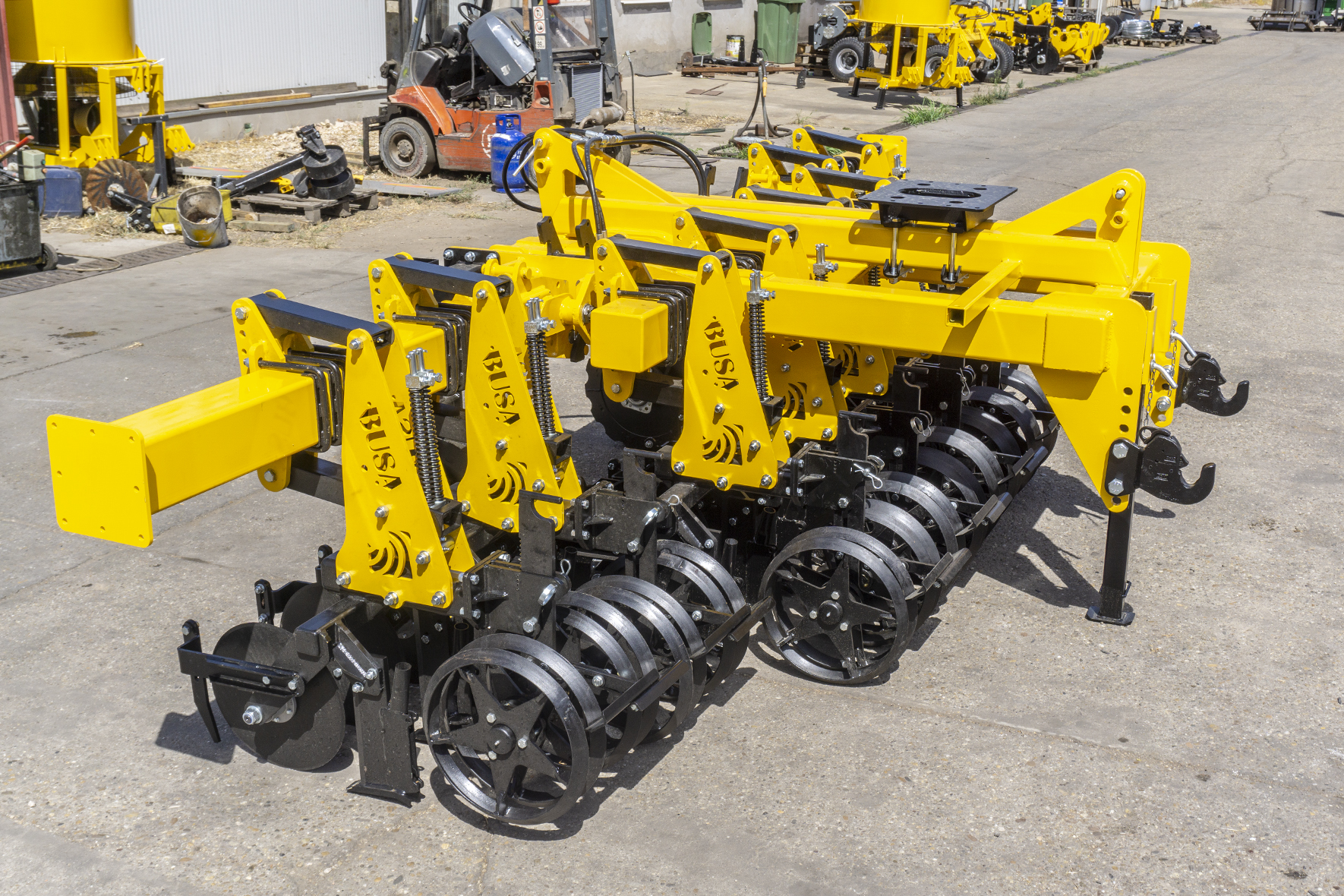
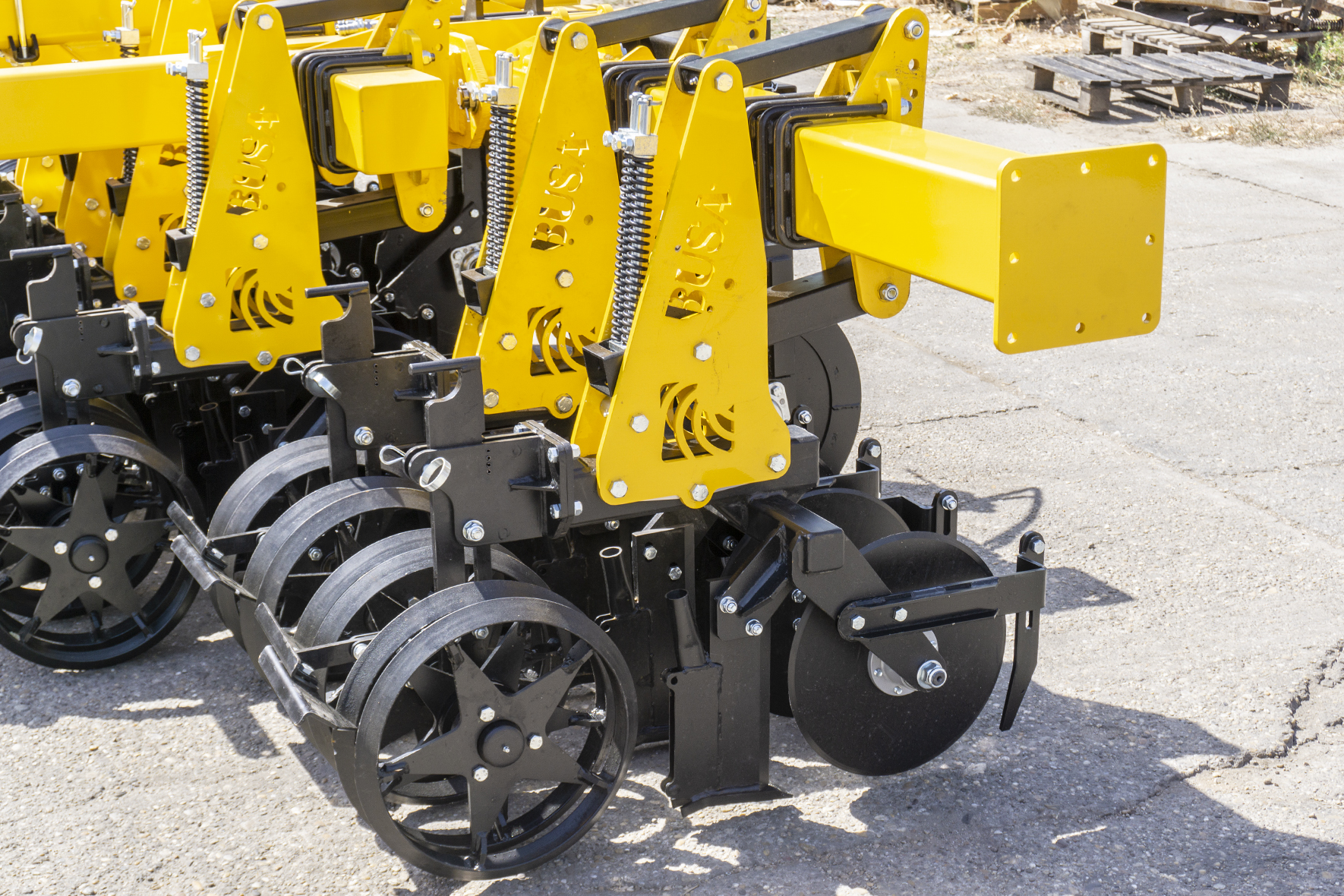
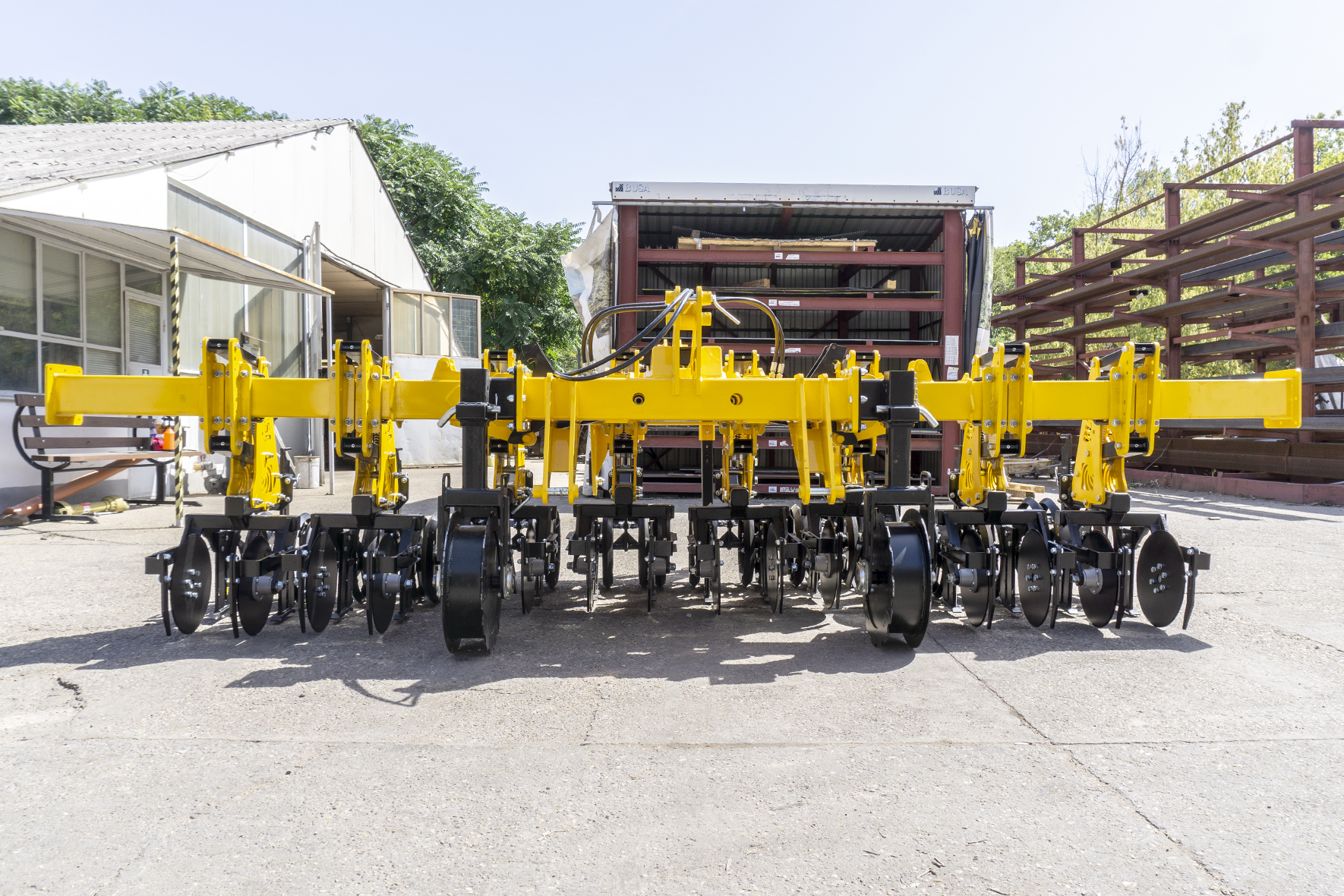
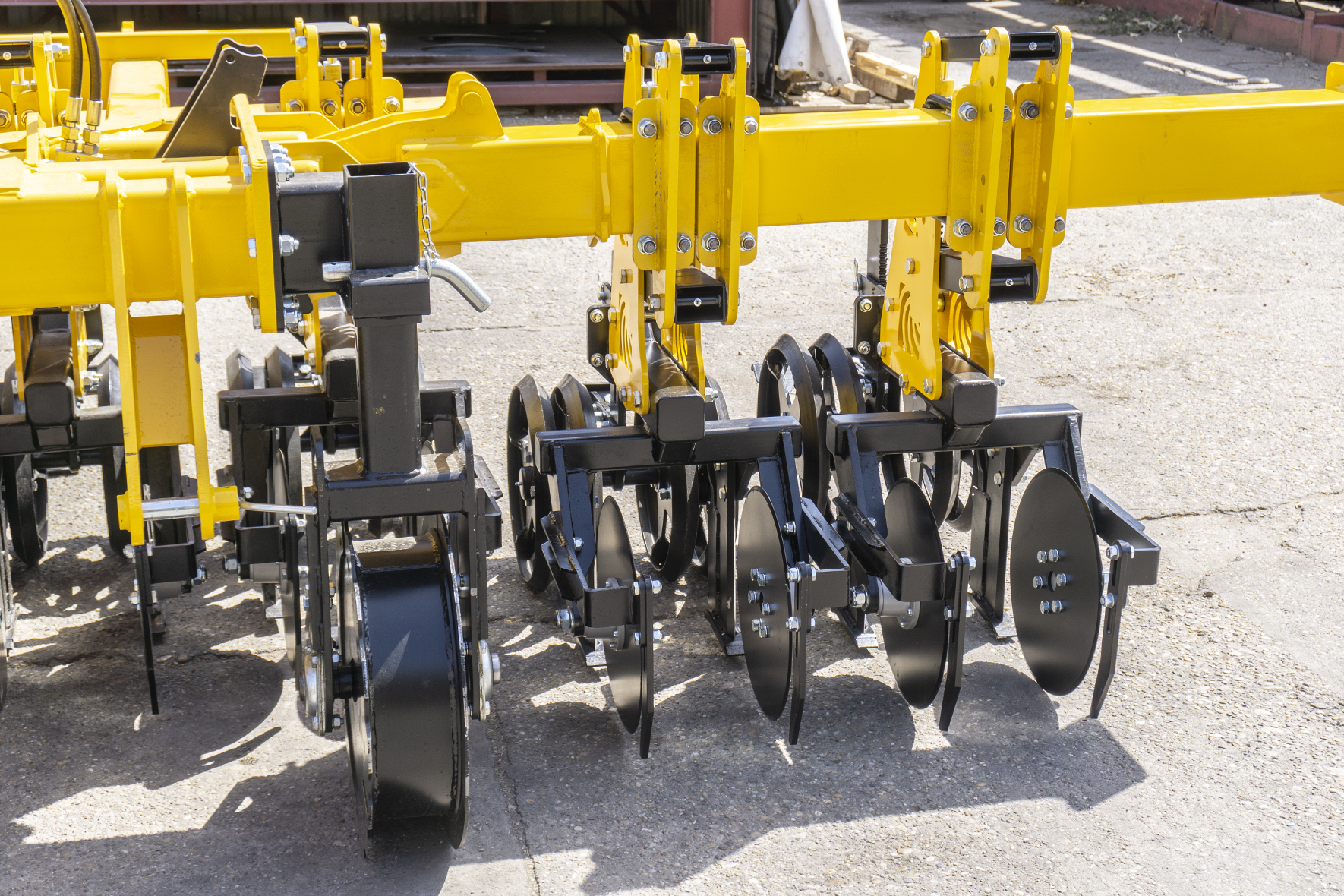
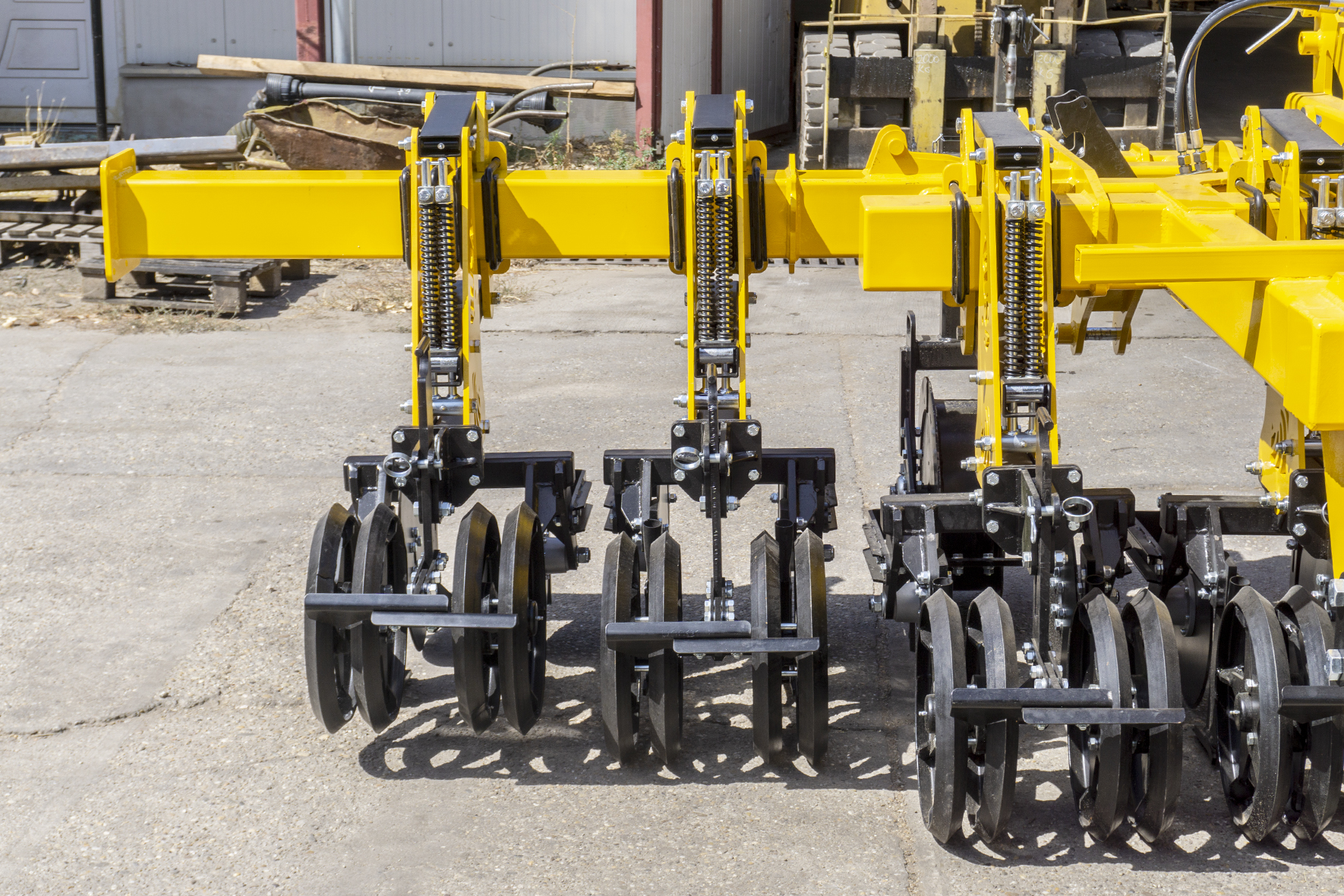
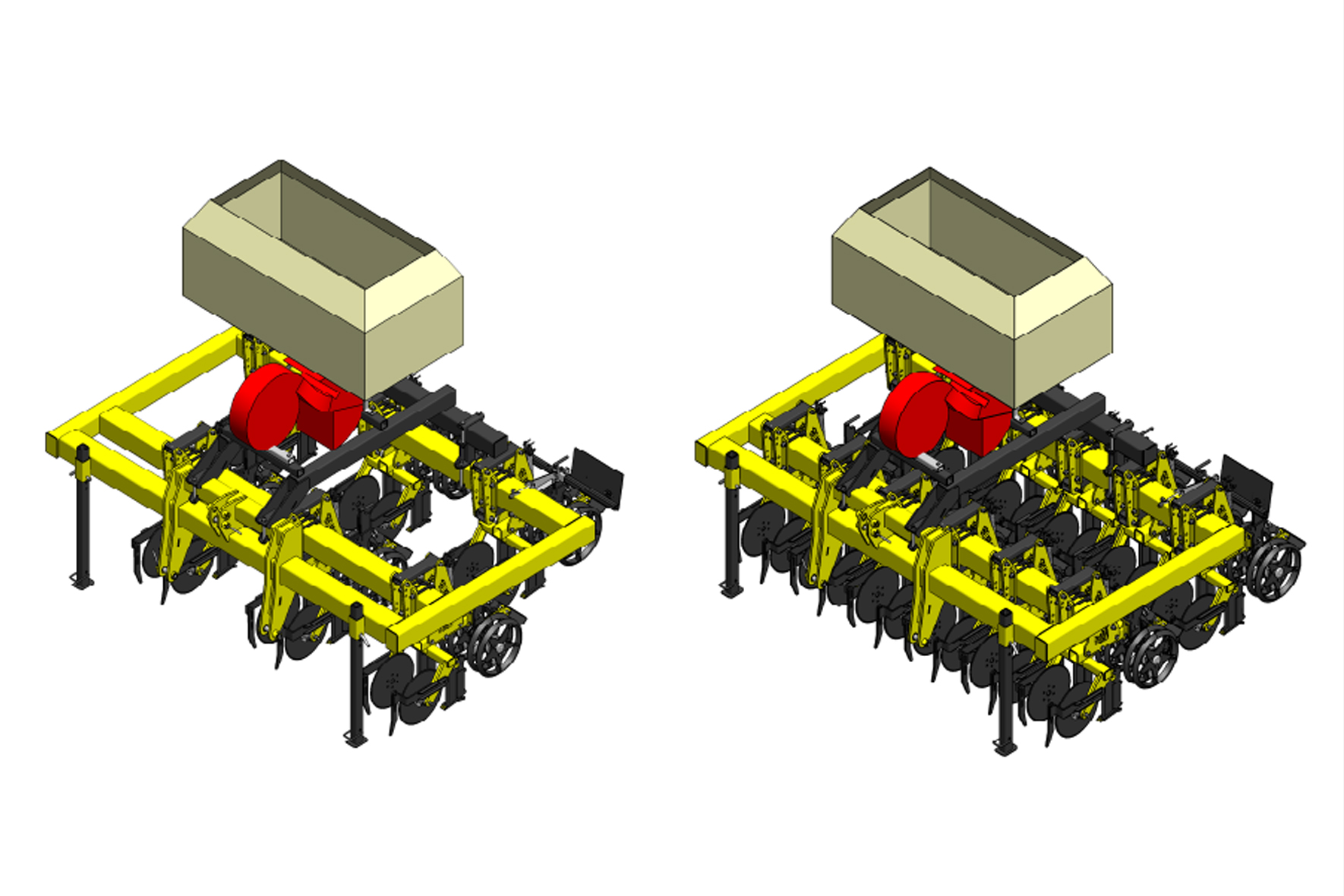
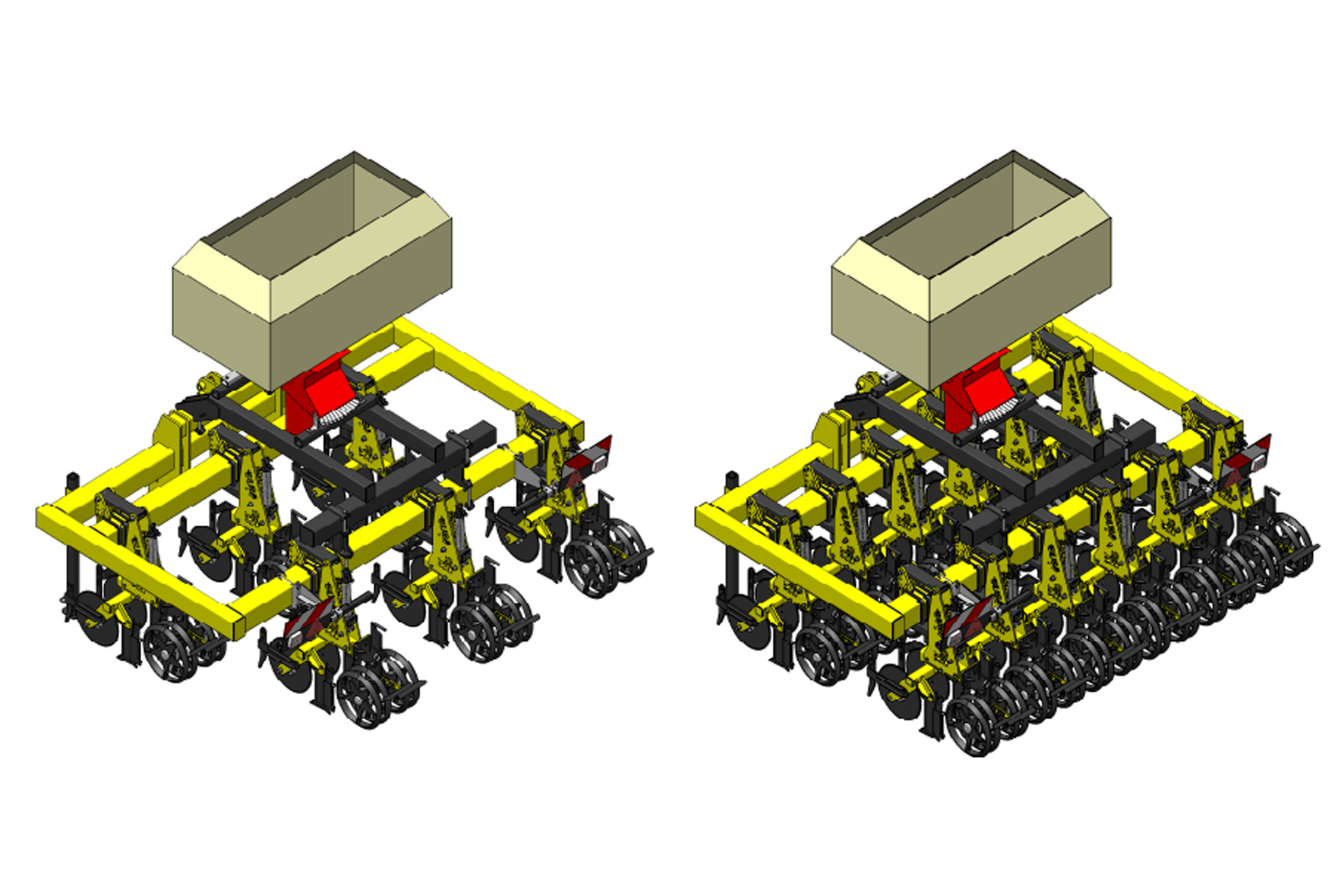
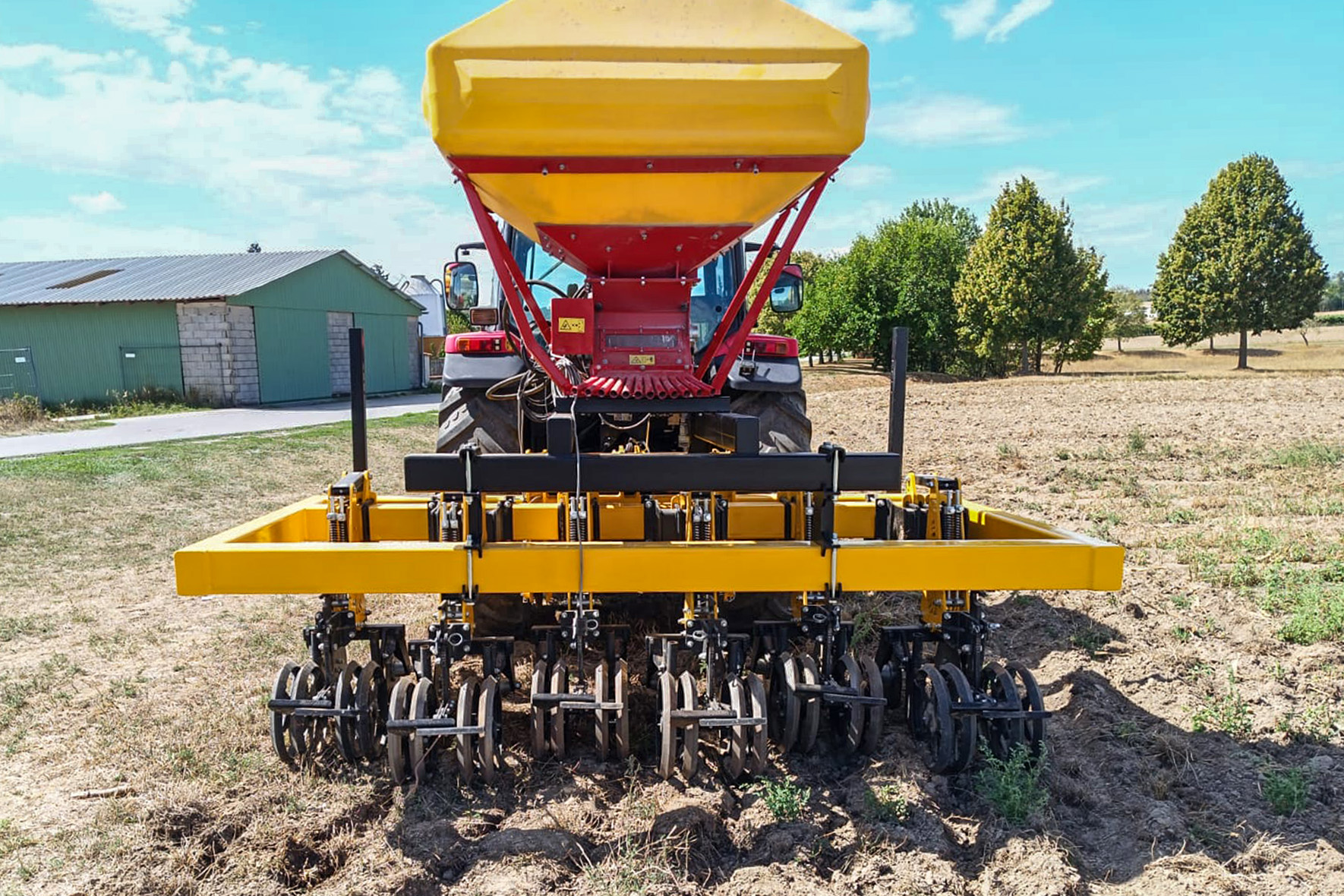
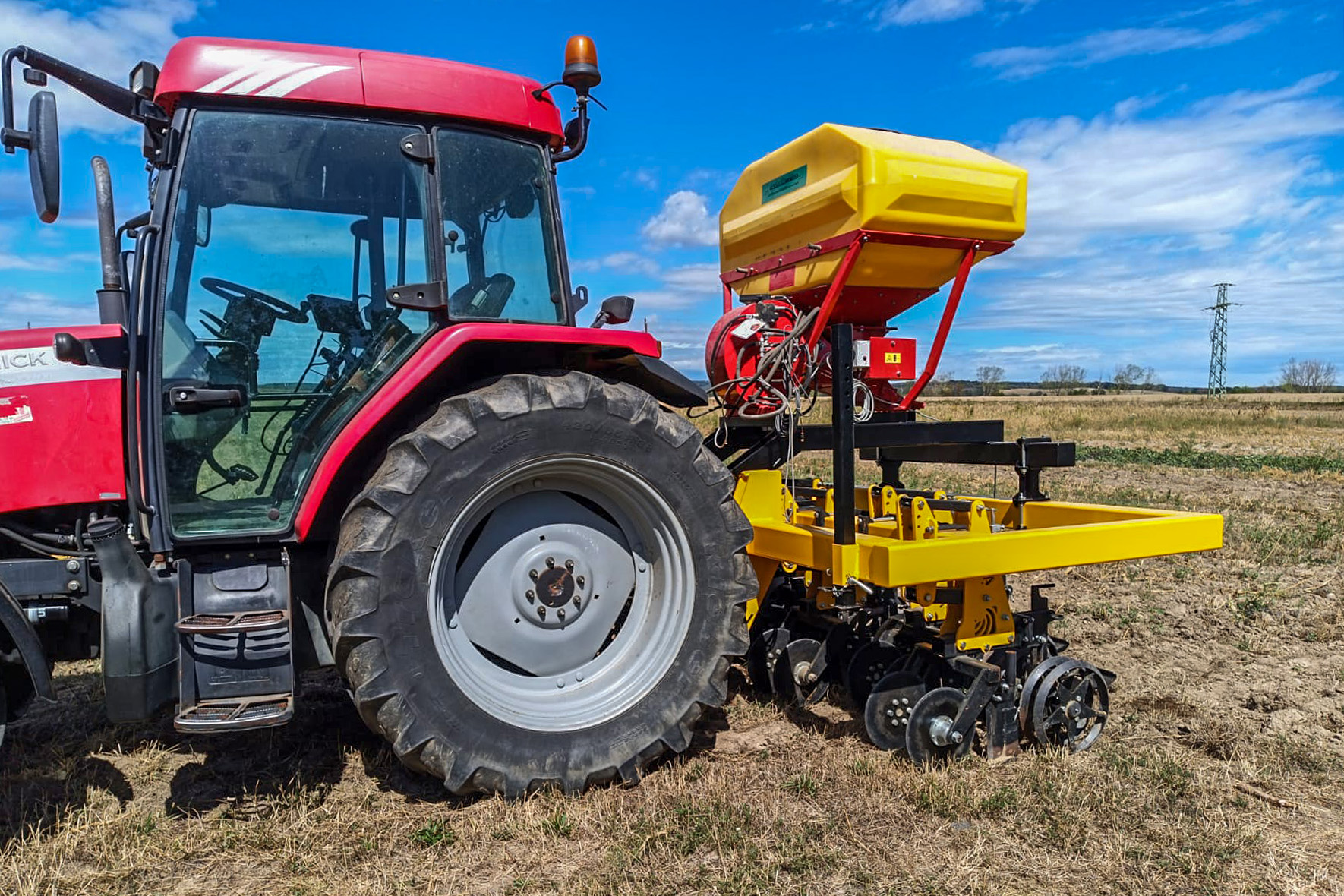
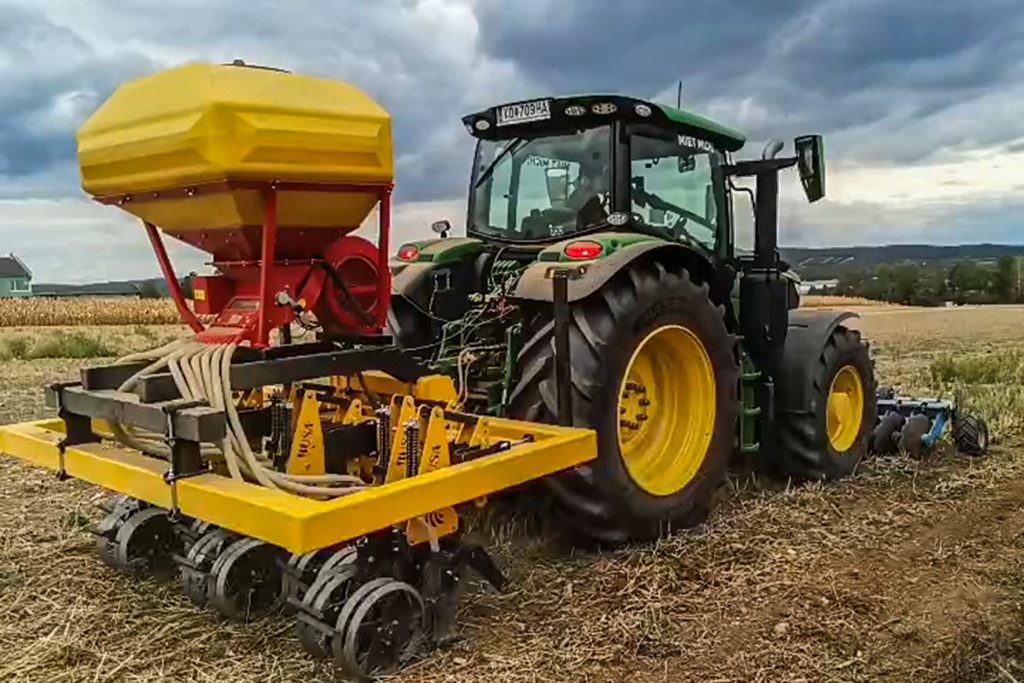
From there, it only took a bit of imagination to ask: what if we built it in two rows, with staggered units — and suddenly the 12.5 cm row spacing was right in front of us. To make that happen, we needed a twin frame. At first, we didn’t bother with folding, and that’s how the 3‑meter BUSA R‑SeedR direct drill was born, equipped with 6 + 6 double‑disc seeding units.
Any spacing layout can be used on the toolbars, allowing all previous row‑spacing configurations to be implemented. It can operate as a full‑surface 12.5 cm drill; a wide‑row 25 cm drill; or a Strip‑Till / band‑seeding setup with 75 cm / 25 cm spacing.
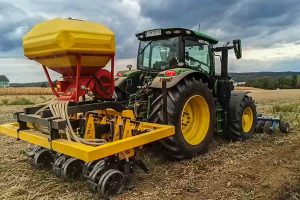
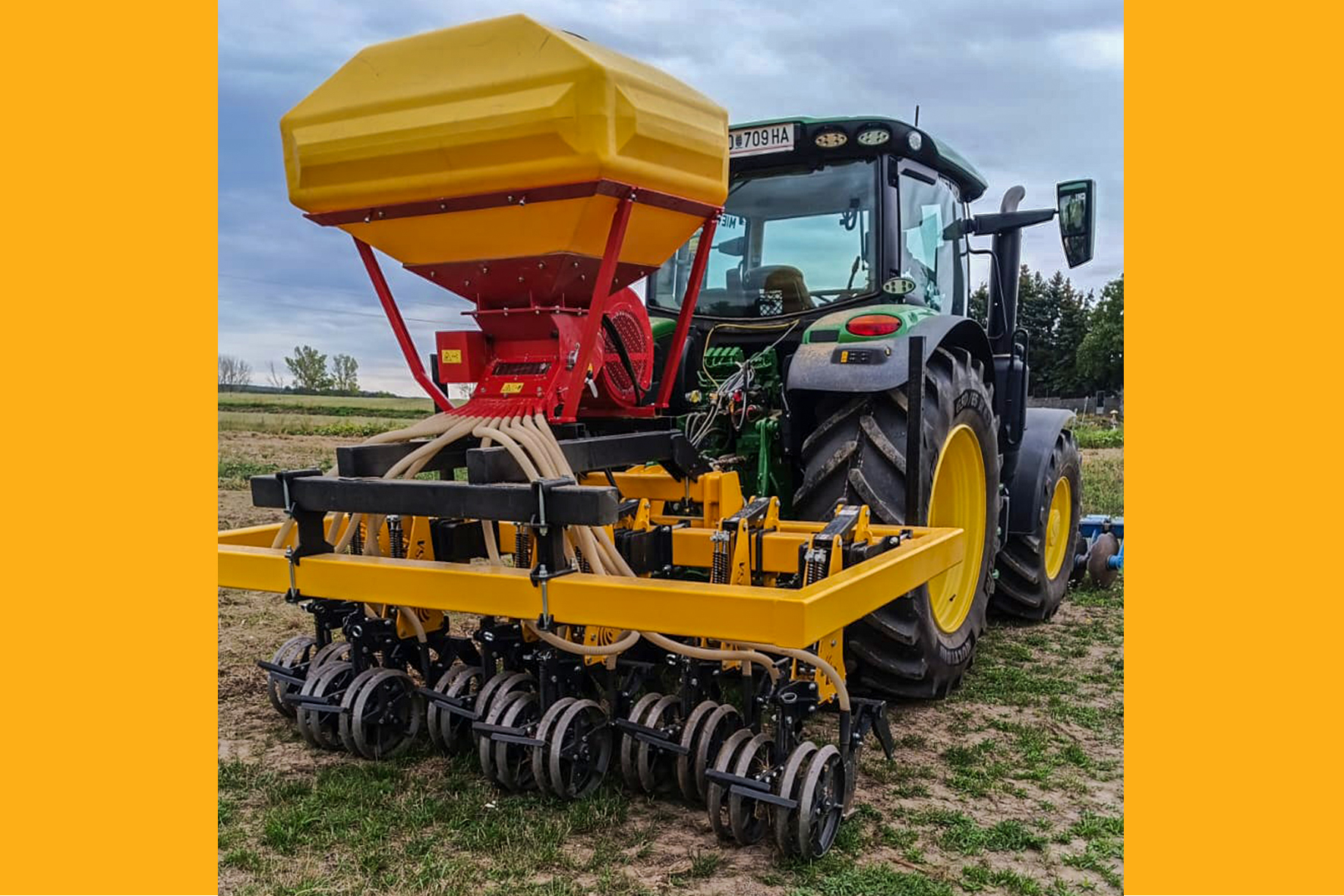
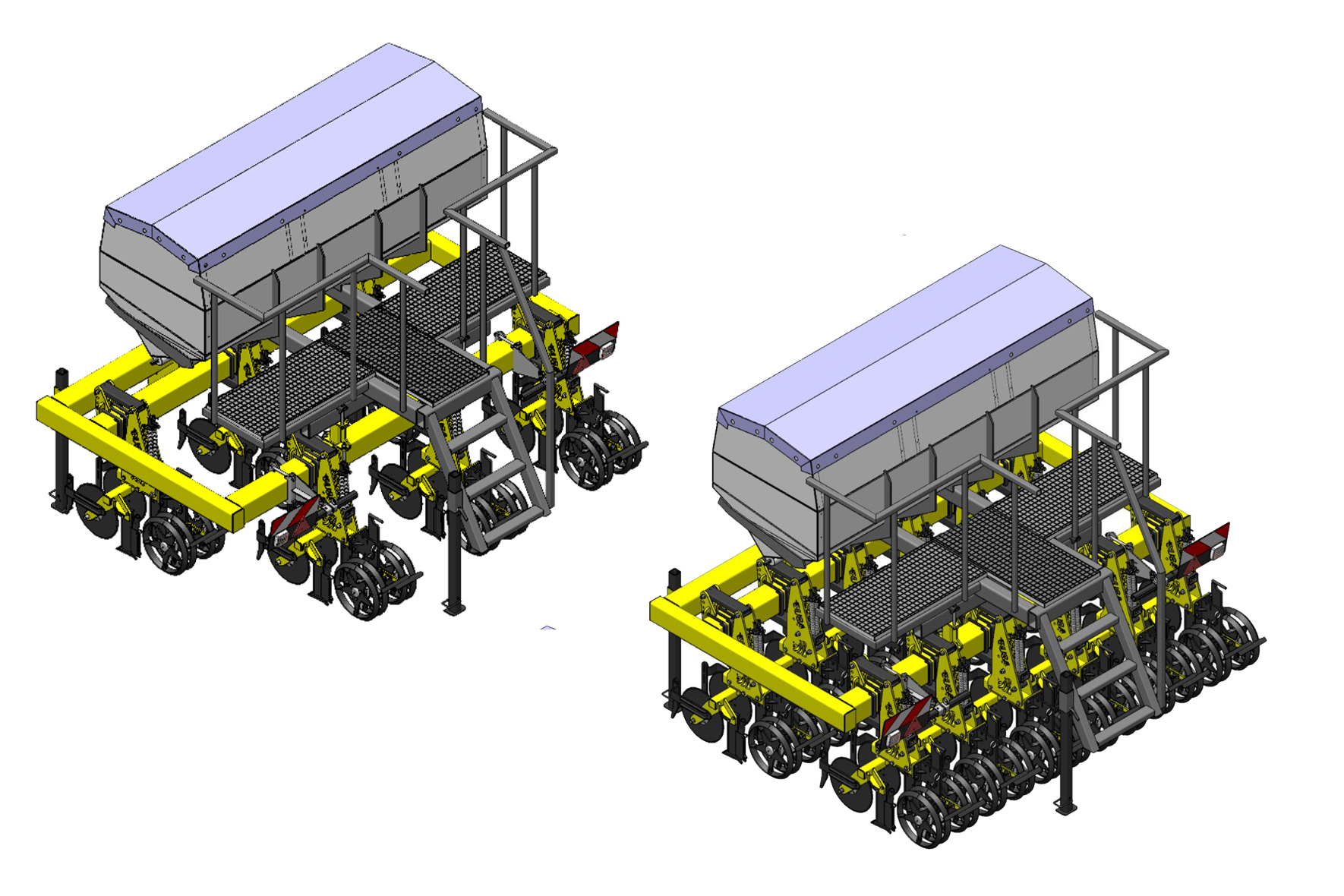
We supplied this machine — and all earlier versions — either from a front tank or from a small‑seed applicator (APV) mounted on top. Then the idea emerged: if we are already using simple solutions, our 2.5 m stainless‑steel fertilizer hopper fits the 3 m frame perfectly. With a small modification, it can even serve as the seed tank. With 12 metering units, the seeds simply drop into the double discs by gravity. If needed, the metering units can be fitted with smaller cell volumes. The drive can be a basic mechanical system, but electric, speed‑proportional metering is also available.
What is it for — and what is it not for? In this form, it is a seeder that answers the what, rather than the how. The goal is simple: to get the crop to emerge — cost‑effectively. Naturally, a central metering system will not maintain plant spacing accuracy within a centimetre, but under current circumstances this is a compromise many growers may find perfectly acceptable.
To borrow an automotive analogy: in Formula 1, teams spend fortunes chasing the last tenth of a second — and in that context, it makes perfect sense. But the first step is simply having a car that can line up on the starting grid at all.
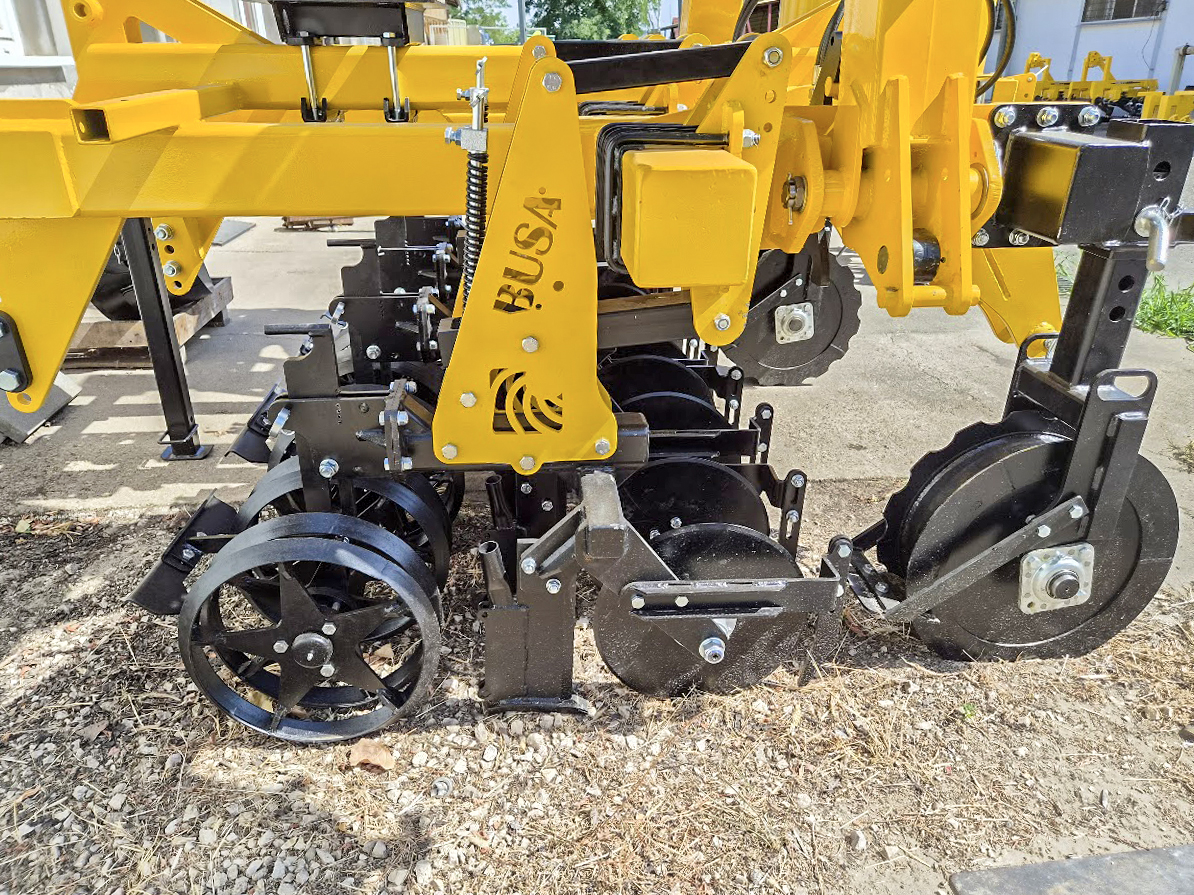
It safely opens the seed furrow, keeps the seeding depth stable with its press wheels, and can be confidently loaded to ensure firm soil penetration.
The BUSA R‑SeedR is not a low‑cost imitation of premium direct drills — it is a deliberately simple, function‑focused entry point into the world of direct seeding.