If you do the same as everyone else, you’re just a copy machine. If you do things differently, people say it’s wrong because it’s not the same. Yet the definition of insanity is doing the same thing over and over again while expecting different results. That’s exactly how we feel about strip tillage.
We arrived at strip tillage by a completely roundabout route, through a series of functional iterations. We were developing machinery for a herbicide-free regenerative farming system when we realized that leaving part of the existing vegetation alive could actually be beneficial. From the perspective of root continuity, it is advantageous to have some living plants present in the field at all times. If we’re already leaving some vegetation alive, why not leave it where we don’t intend to plant, and remove it only where we do?
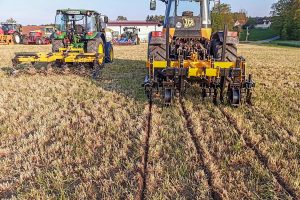
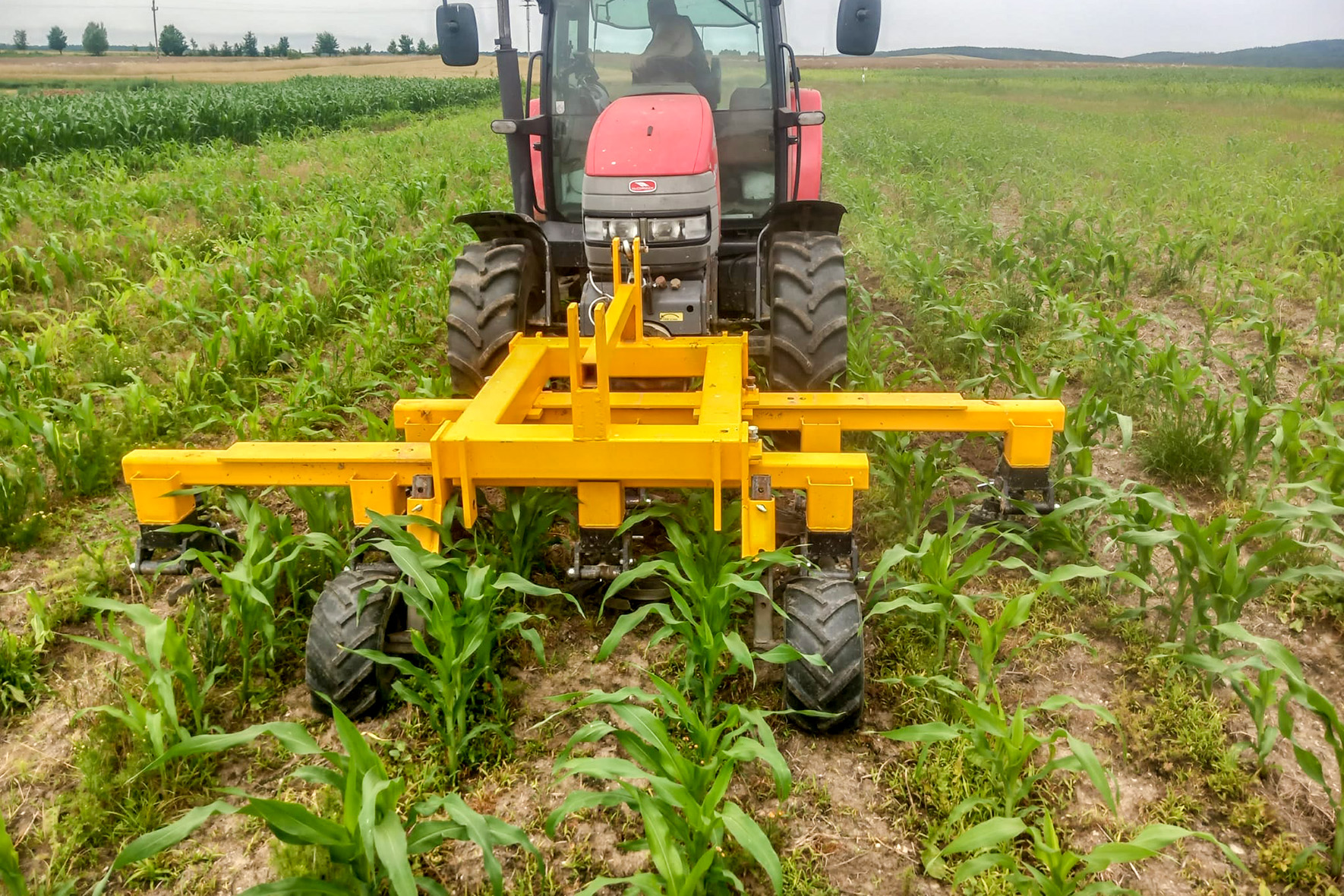
The closest existing concept to this is probably inter-row cultivation. In fact, it’s really a form of inverted inter-row cultivation. Instead of cultivating between the rows, we cultivate the future seed row itself. That’s why we initially started with an inter-row cultivator platform. This was the Gen5 KS FK.
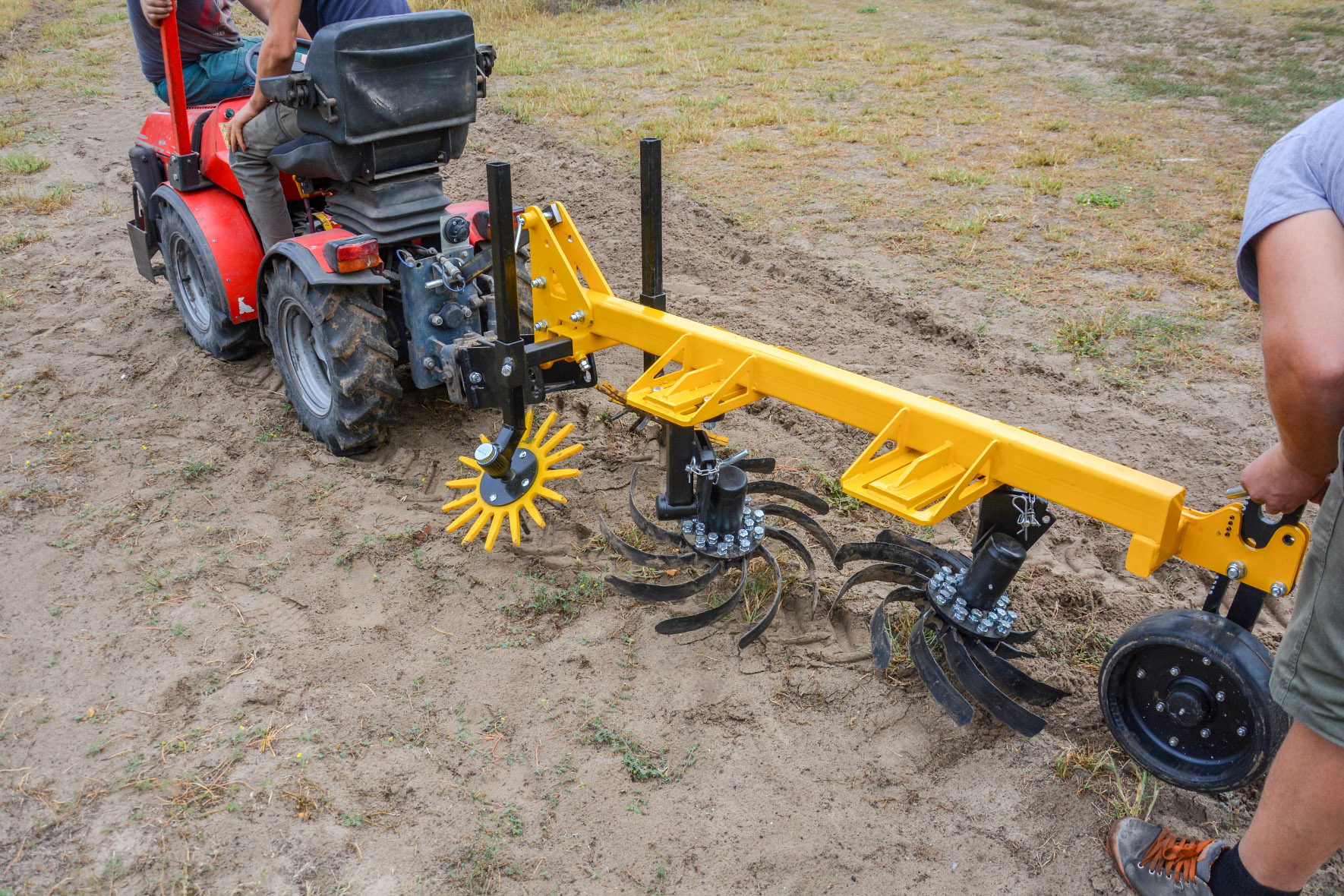
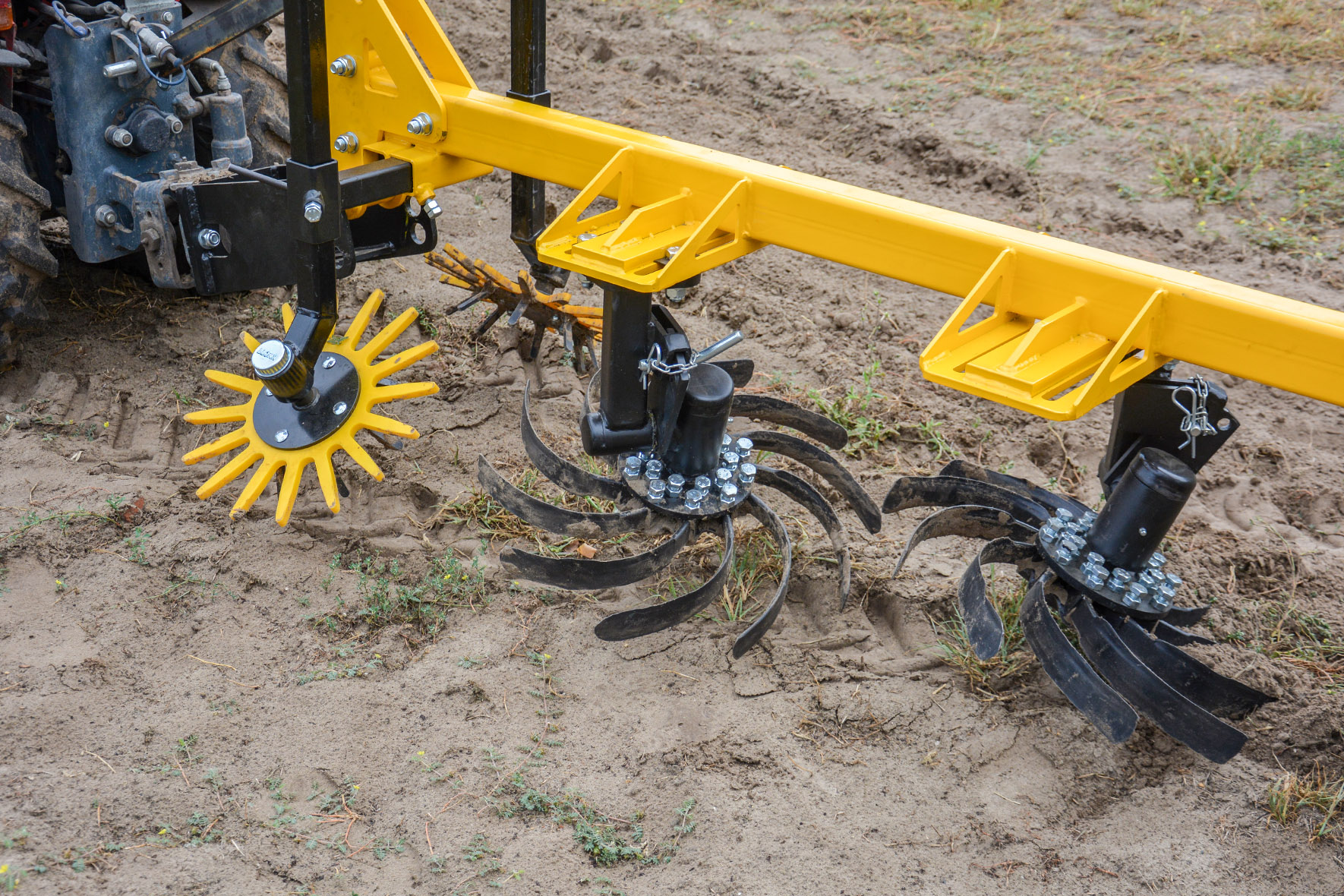
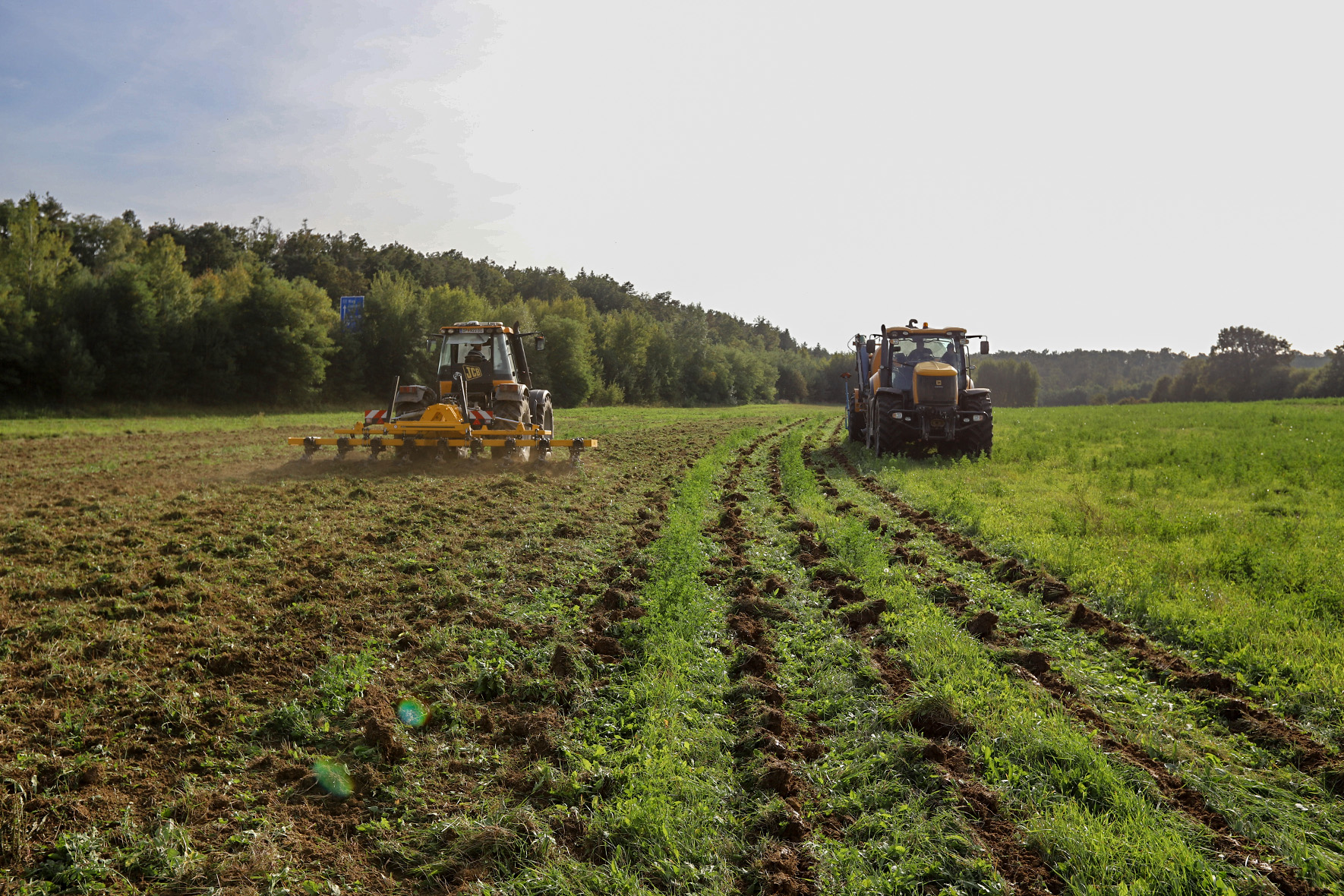
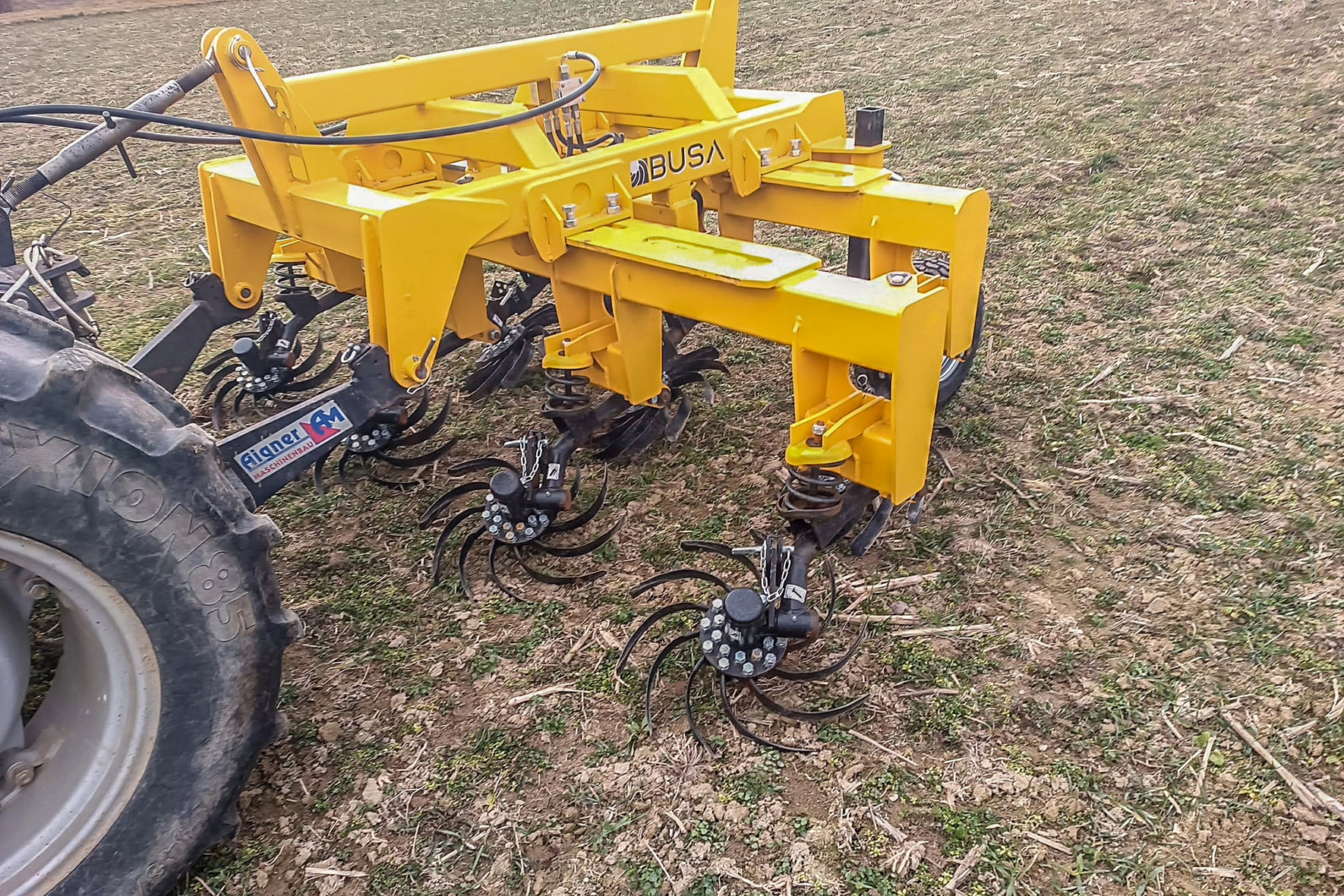
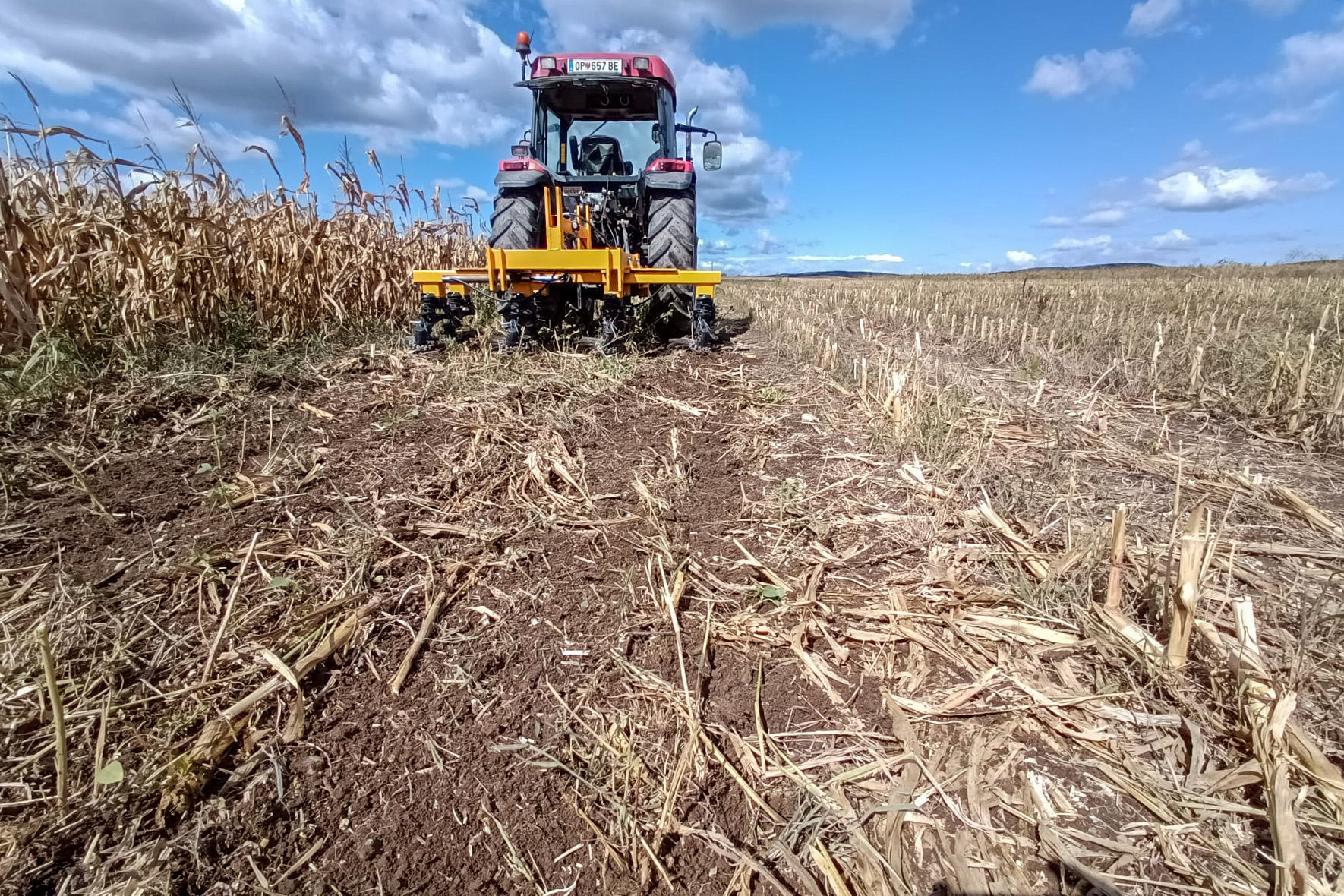
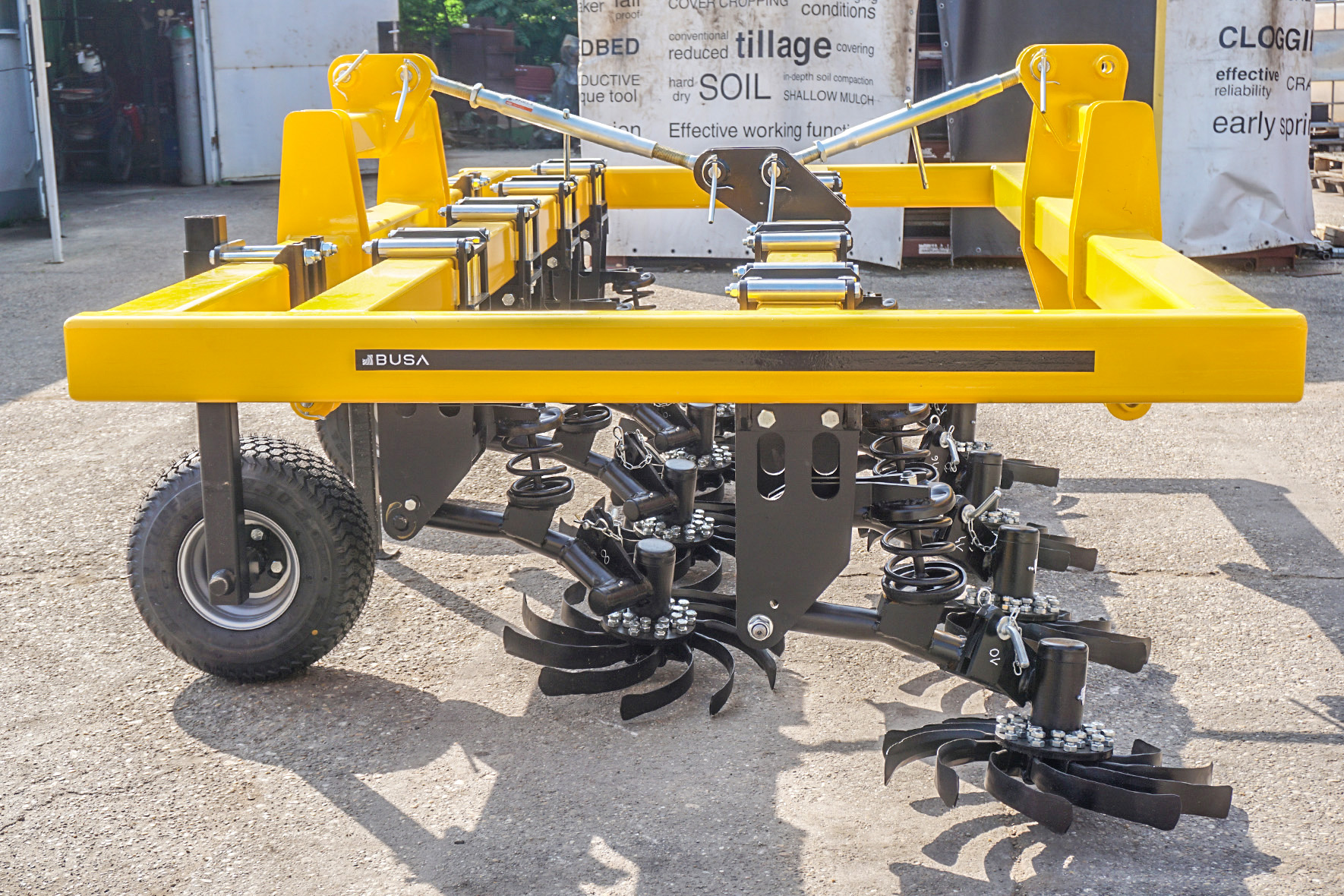
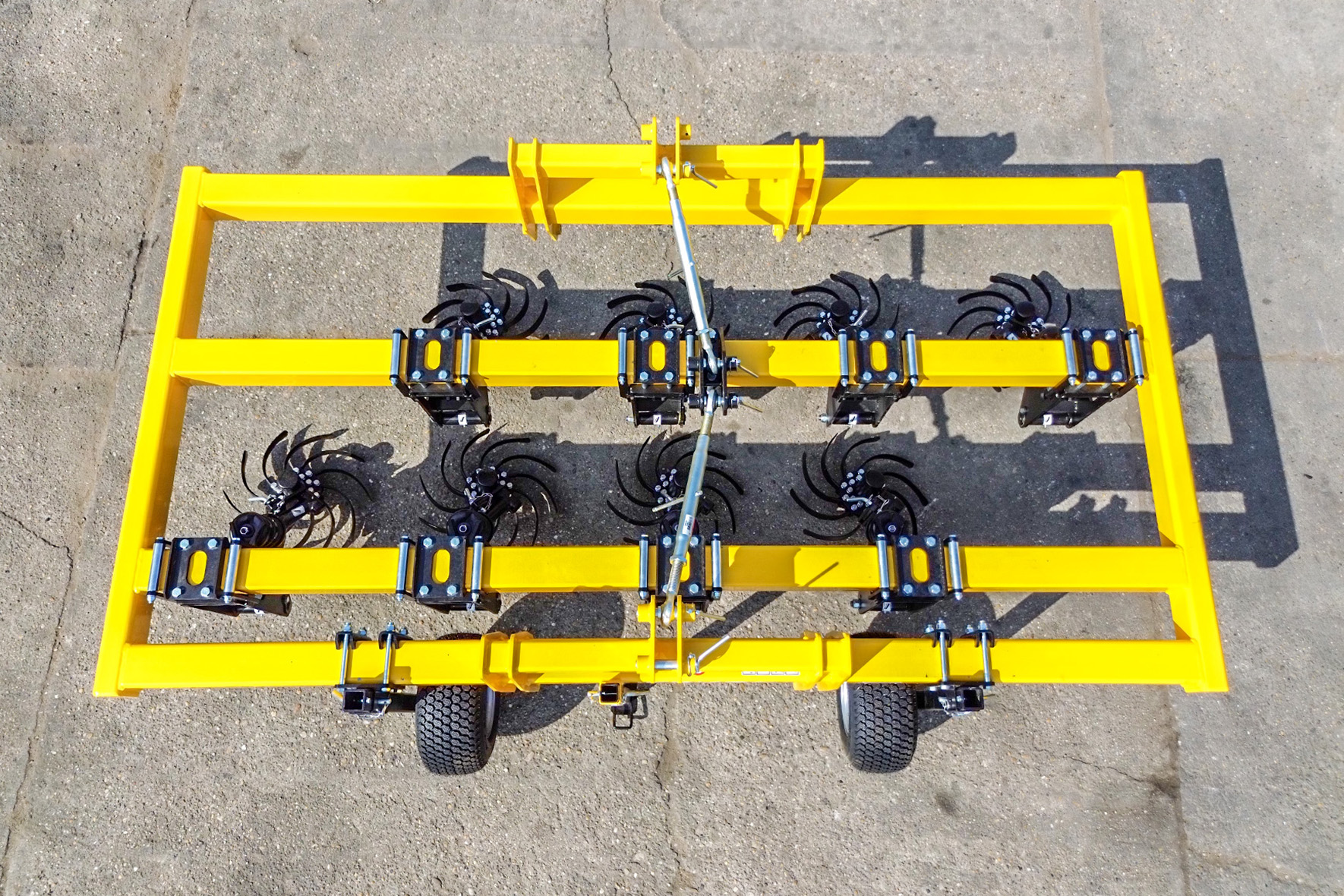
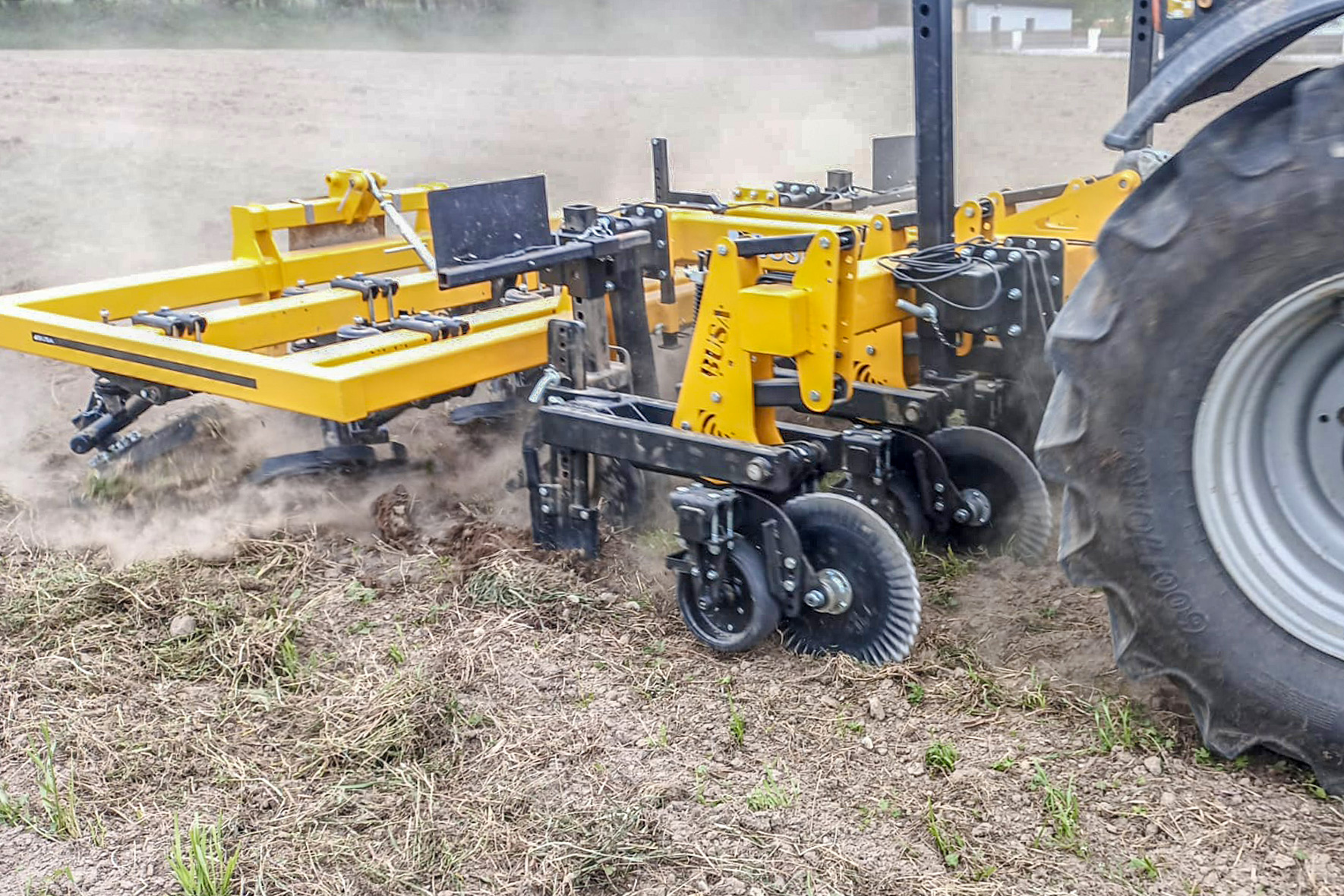
Then there was another line of development. We mounted the BUSA Rotary Hoes onto the toolbars using bolted connections, specifically so that when operating at ultra-shallow depths, the most aggressive soil-engaging zone, especially the overlap between the front and rear rows, could be adjusted as needed. With a bit of creativity, we realized that if the units were mounted at 75 cm row spacing and arranged so that the front and rear rows worked in overlapping bands, we effectively had a strip refresher, a strip terminator, or whatever you want to call it. What began as an adjustable ultra-shallow cultivation setup suddenly became a machine capable of selectively managing vegetation in narrow strips while leaving the surrounding area untouched.
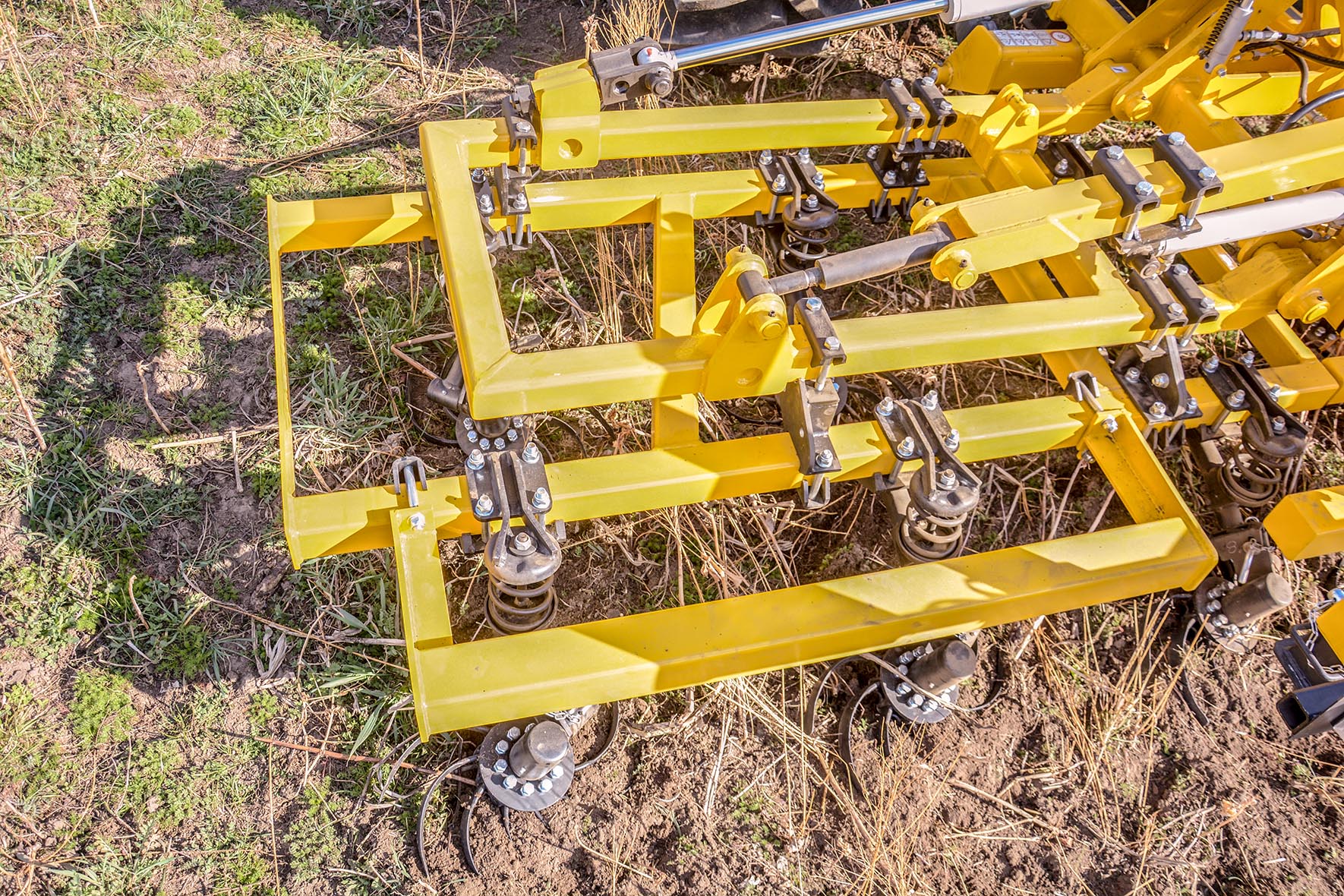
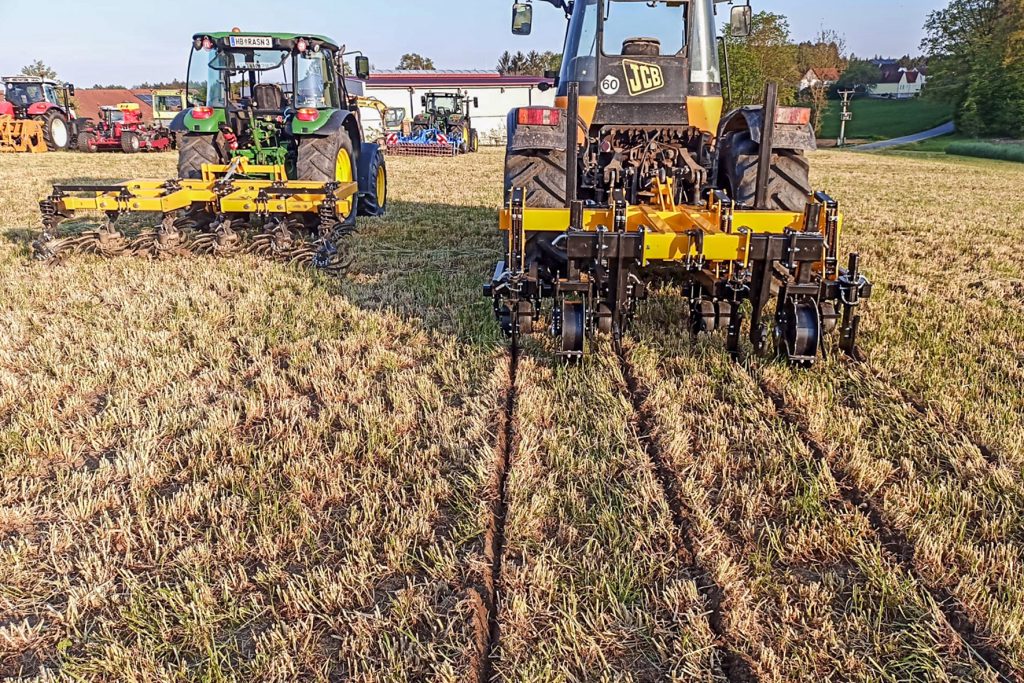
Reconfiguring such a machine was somewhat complicated. You had to loosen bolts, and the rotors are neither light nor particularly eager to slide into a new position. That’s when Franz Grötschl came up with an idea. On the previous machines, if we wanted to adjust the width of the cultivated strip, we had to move every front rotor, for example, 1 cm to the right, and every rear rotor perhaps 1 cm to the left. The important thing was that each rotor had to be moved by exactly the same amount. So the question was: what if we linked them together? Better yet, what if we welded them all onto a common toolbar and moved the entire toolbar instead? And that’s exactly what we did. As a result, the cutting position of the BUSA Rotors can be adjusted very quickly, even while working in the field. If I want it to be a strip cleaner, it can be a strip cleaner. If I want it to be an inter-row cultivator, it can do that as well, because the toolbar clearance allows it.
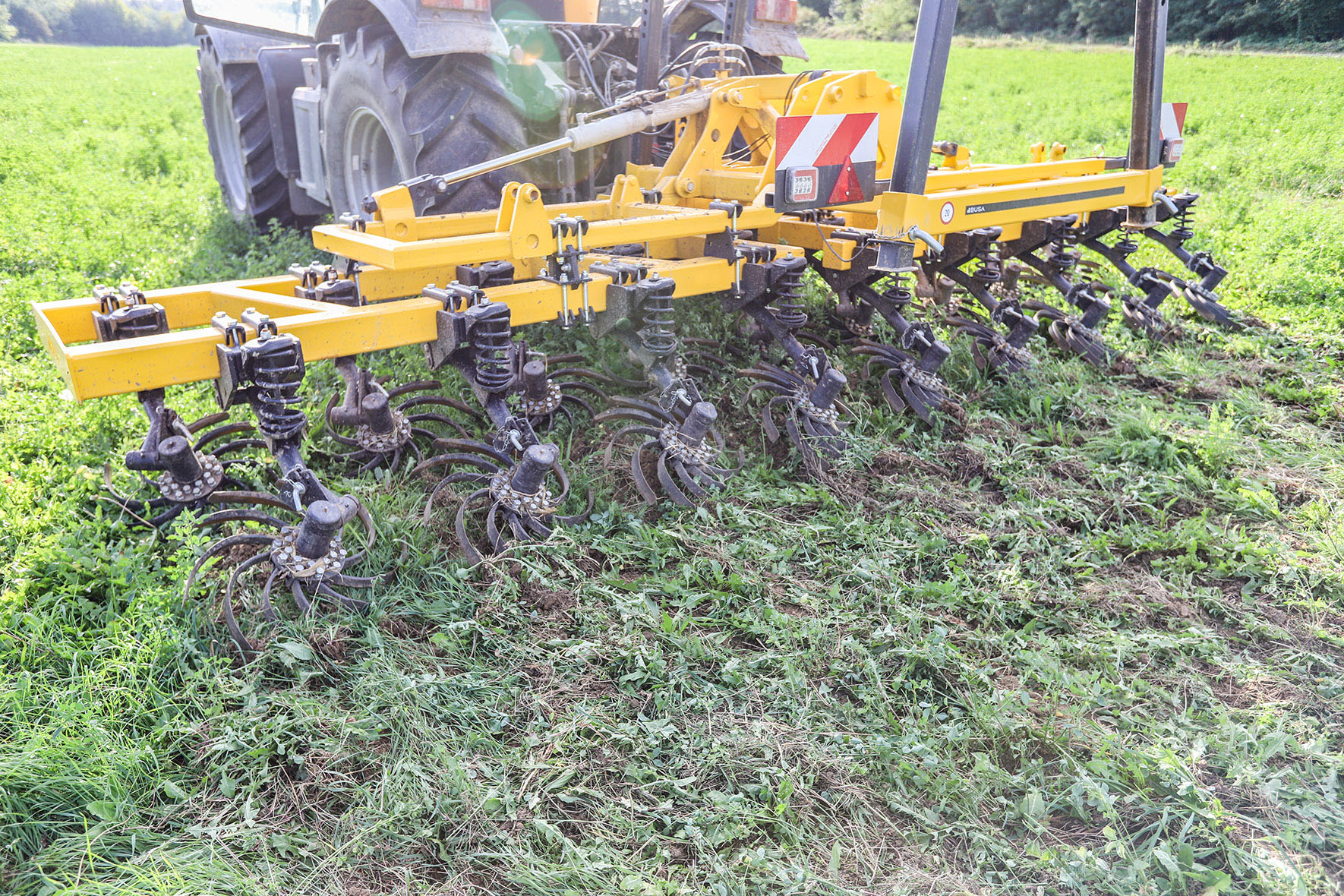
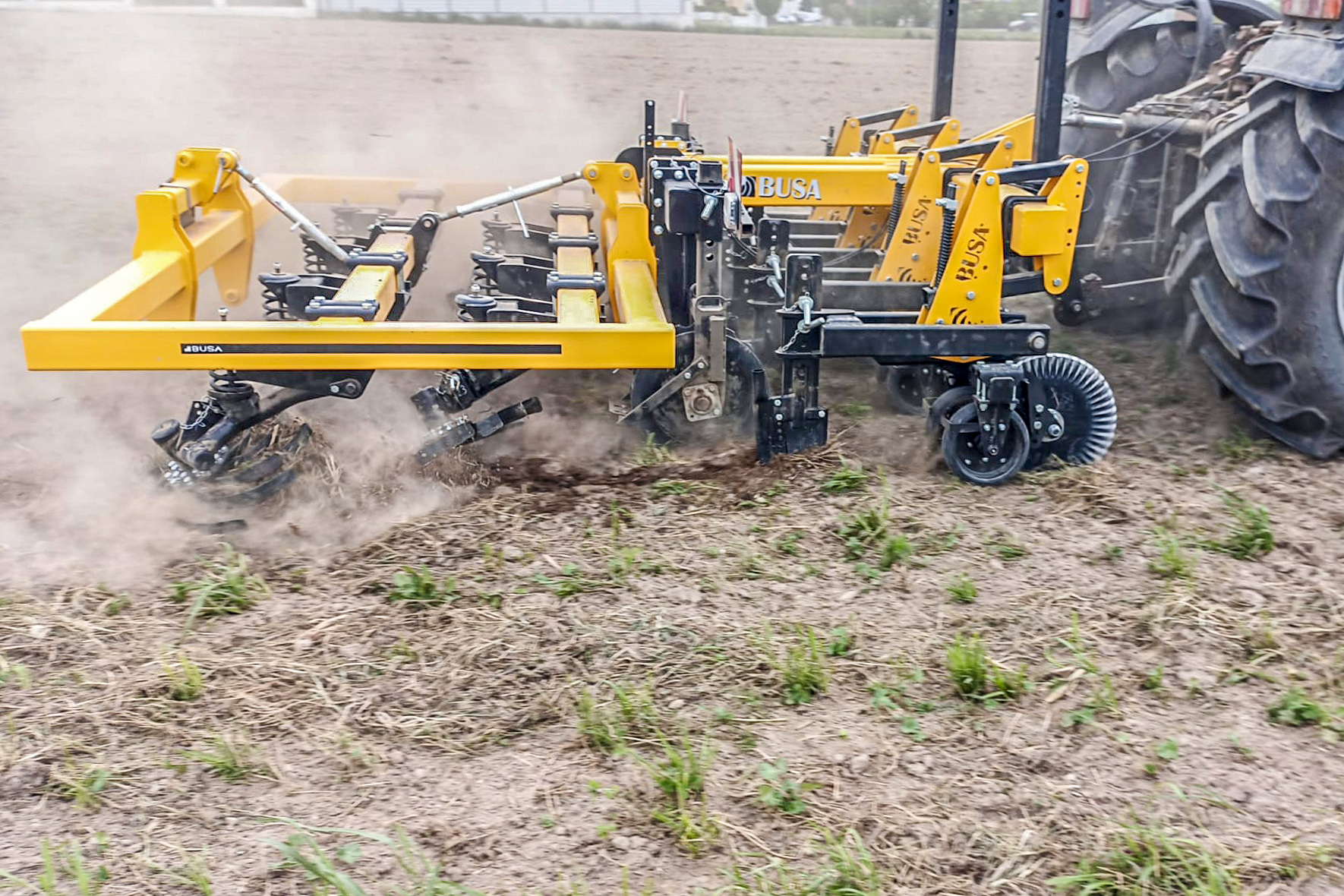
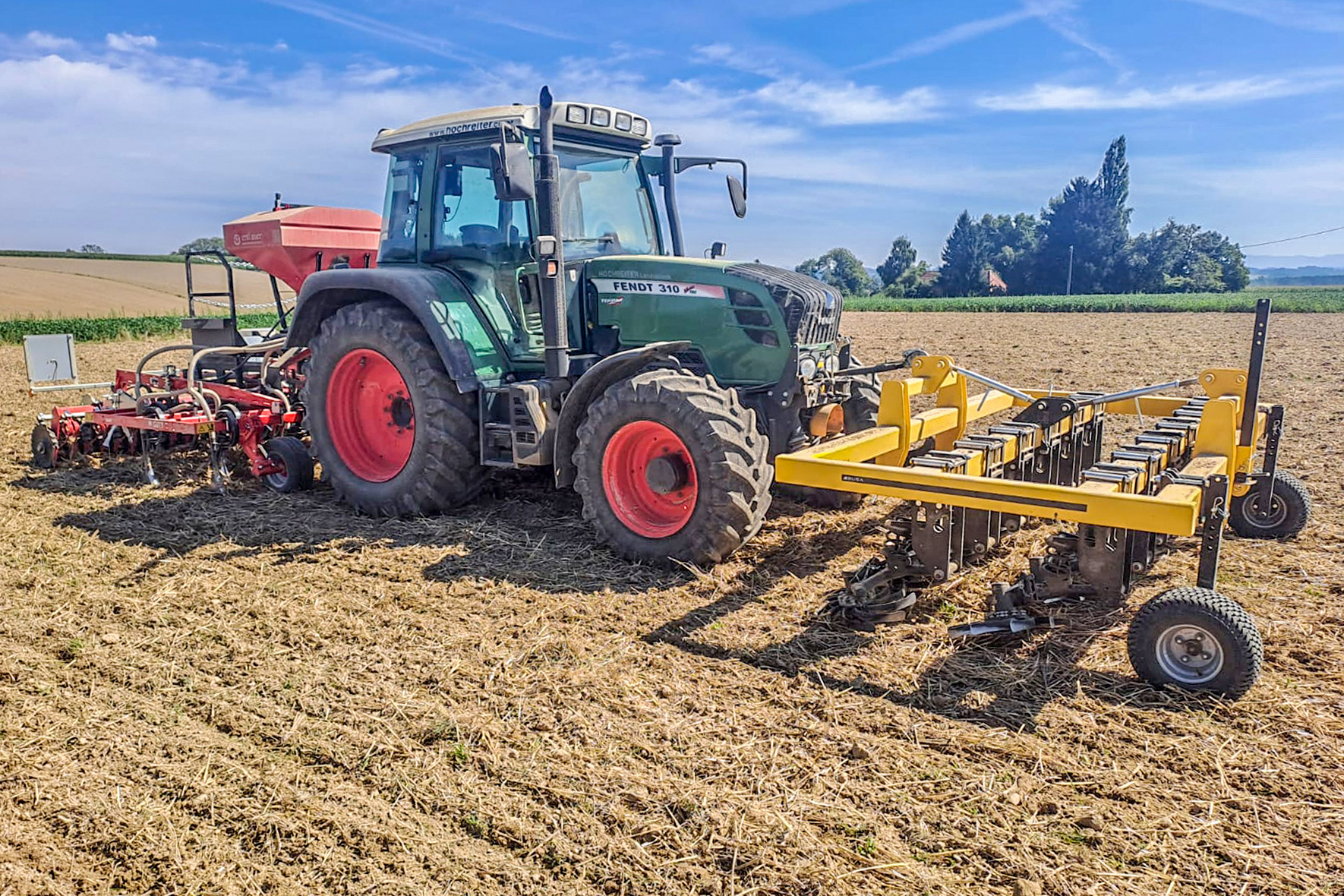
A half step back brings us to the GYMF Multi. This version received increased toolbar clearance and small guide rollers on every rotor mount. Once the retaining bolt is loosened, the rotors can be repositioned easily. It requires a bit more manual work than the hydraulic version with the fixed toolbar, but in return the 3-metre machine is delivered with 12 rotors configured for full-width cultivation, with the rotors working edge-to-edge. Remove two rotor units from each side, and the same machine becomes a 4-row strip-till unit or row cleaner. In other words, the machine can be reconfigured from full-surface cultivation to strip-tillage with only a few adjustments, providing a simple and versatile solution for different field conditions and management strategies.
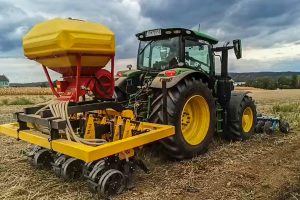
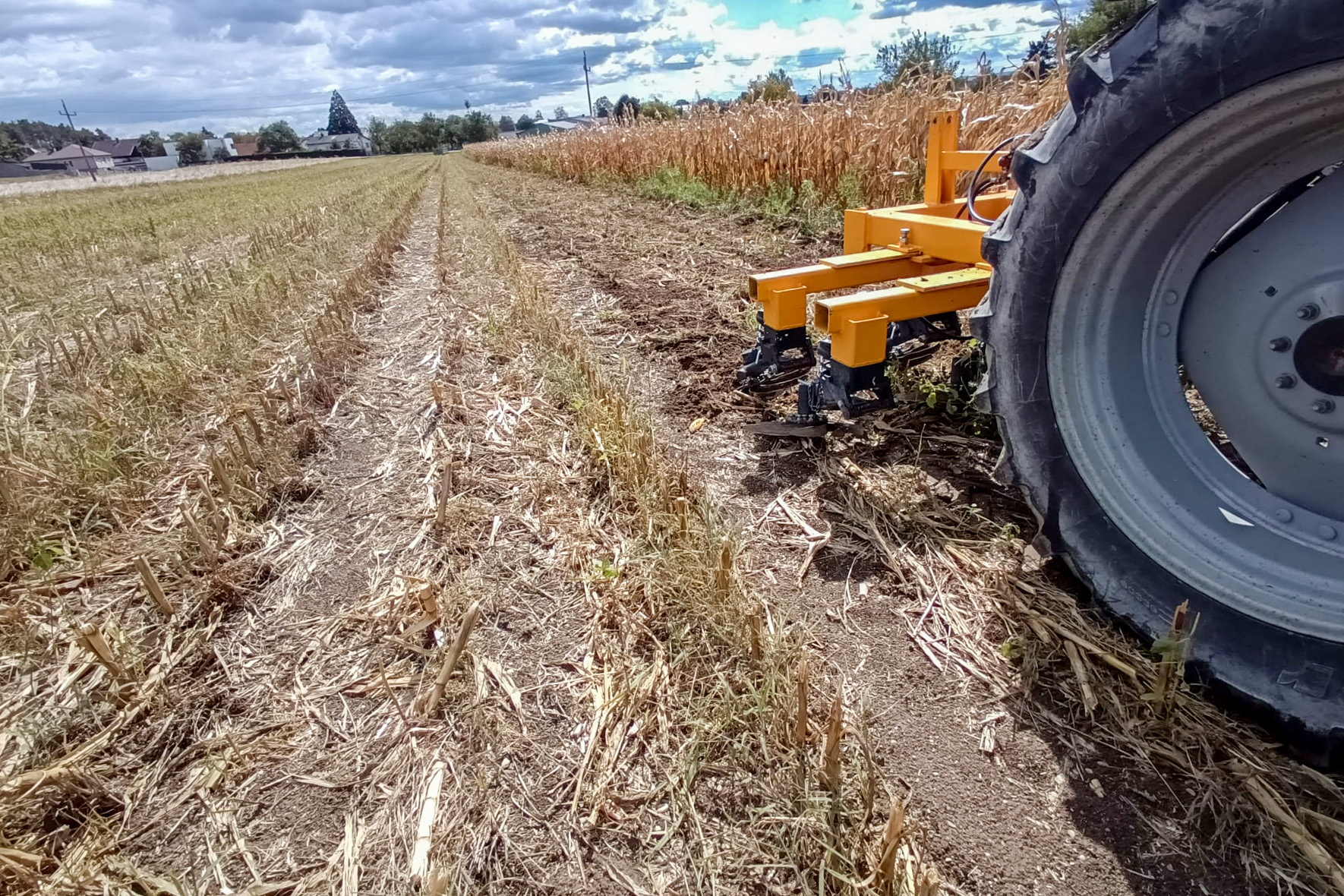
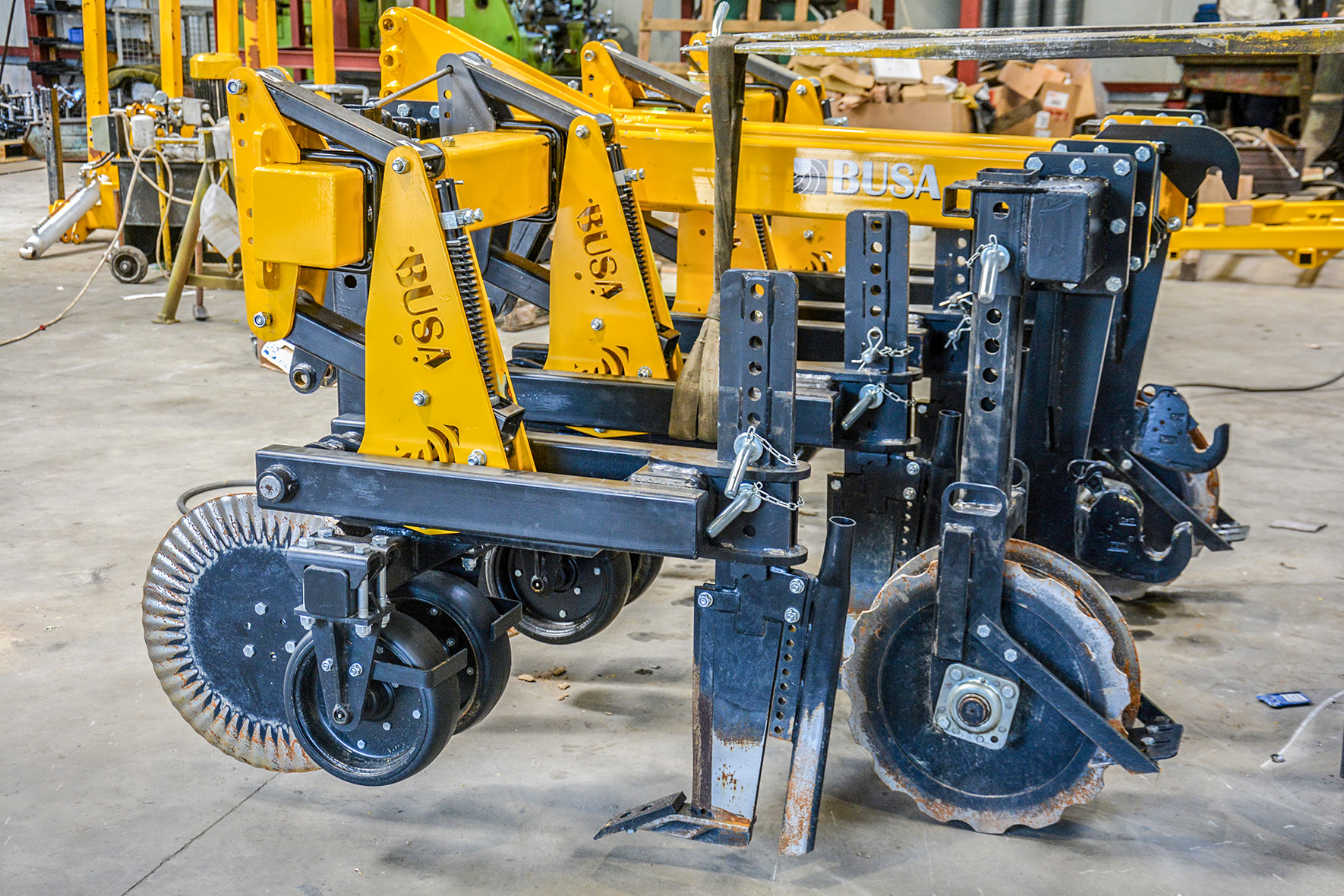
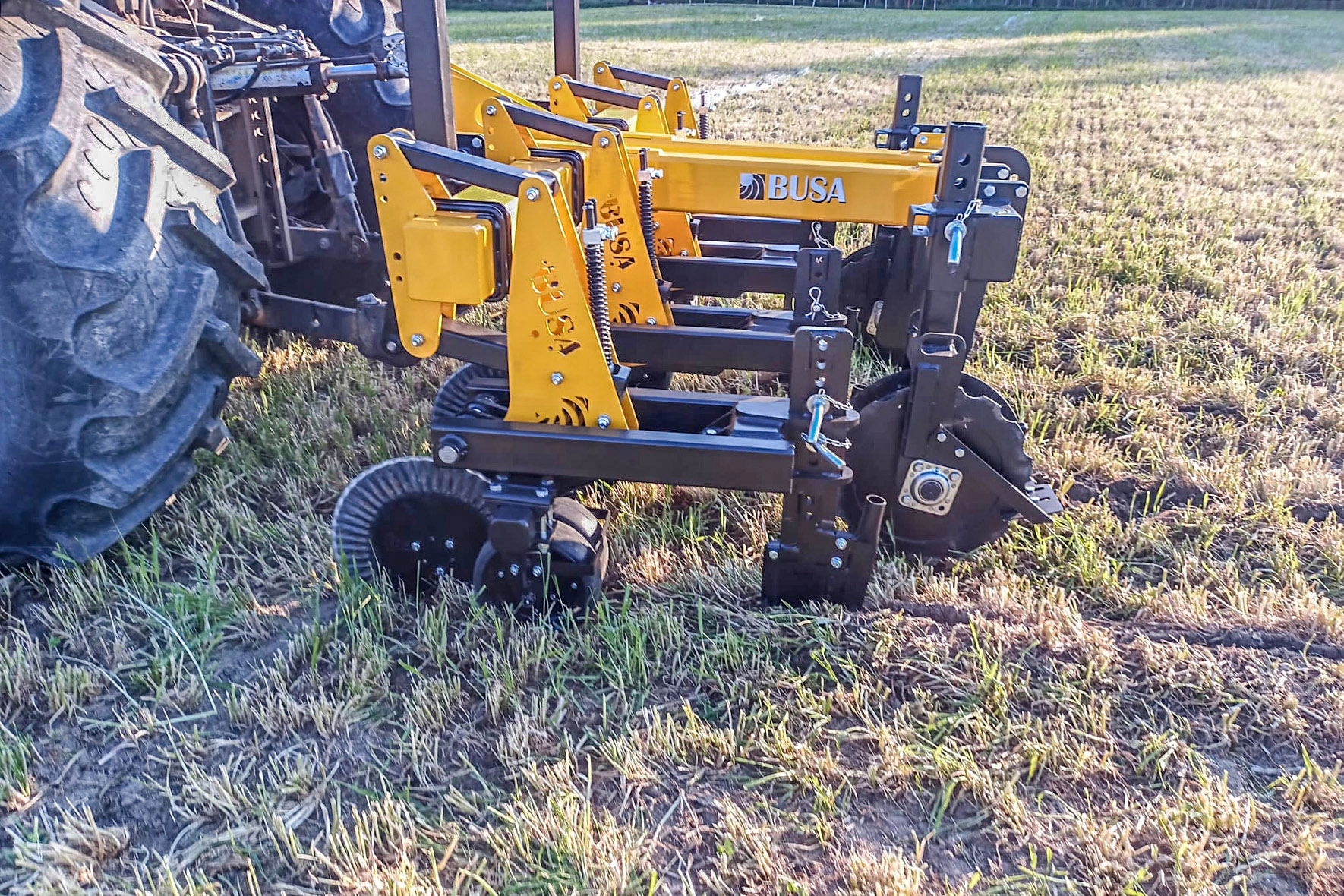
So is this really strip-till? After all, it isn’t built around conventional row cleaners. Fair point. But the BUSA Rotary Hoe is a descendant of the rolling element concept, which essentially makes it an evolved version of a row cleaner anyway. And is it really strip-till if it doesn’t have a ripper shank? Again, fair point. On the one hand, the ripping function can be performed with a low-disturbance loosening tine if needed. We already have solutions like that in our product range, even for 75 cm row spacing. And BUSA also offers its own dedicated strip-till cultivation unit. This dedicated strip-till unit starts with a gauge wheel for precise depth control, followed by a cutting disc. Behind that comes a low-disturbance tine equipped with a small point and a slim, straight shank designed to minimize soil movement. If required, the unit can also apply granular products or liquid fertilizers behind the tine. It is even capable of placing slurry directly into the soil profile.
To turn these individual components into a unified system, we typically build the strip-till unit with a rear three-point linkage. This allows it to carry the GYMF Multi directly behind it, providing the perfect solution for closing and finishing the strip with the rotary hoes. In this configuration, the strip-till unit prepares the strip, while the GYMF Multi follows behind to condition and finish it, creating a complete and highly adaptable strip-tillage system.
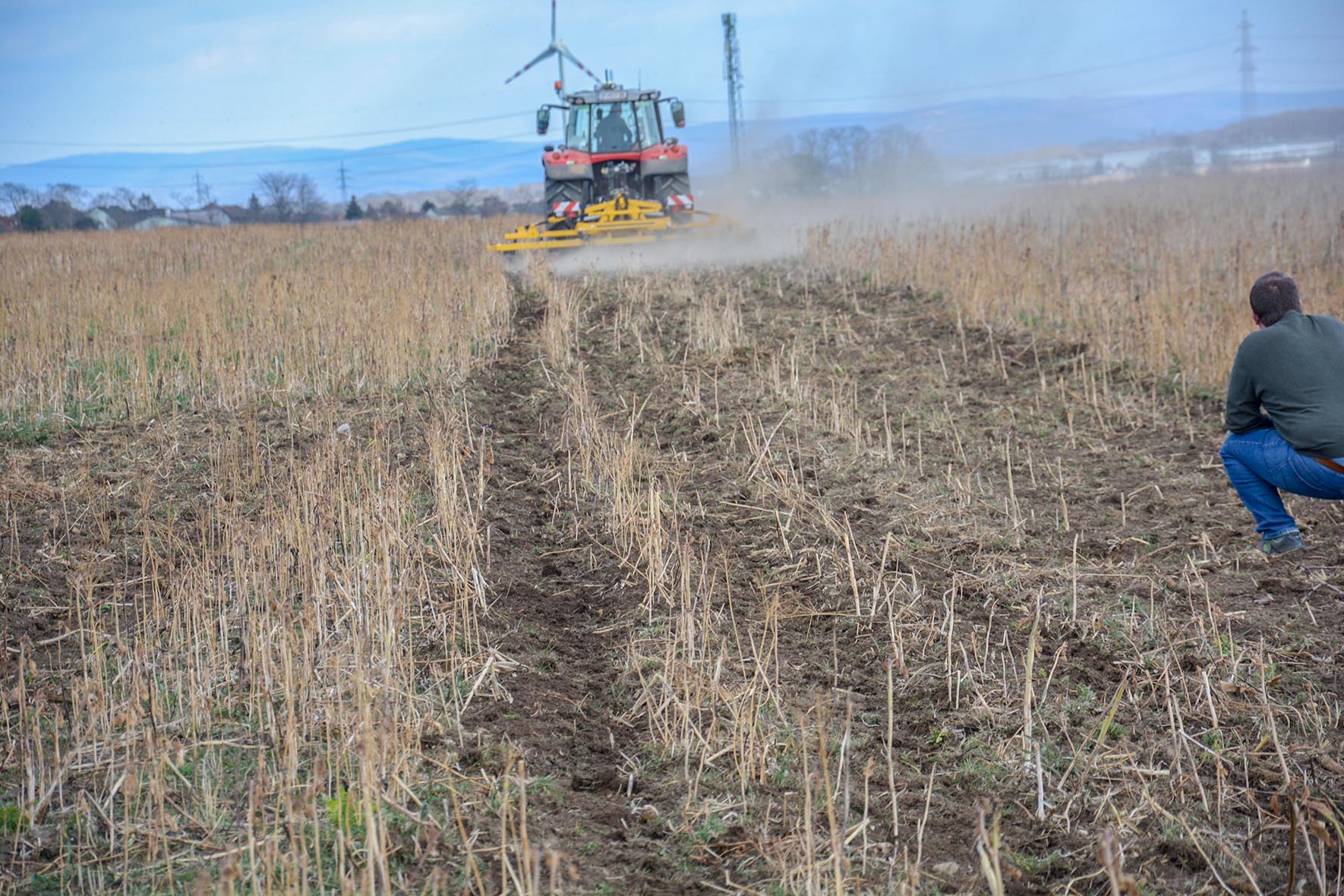
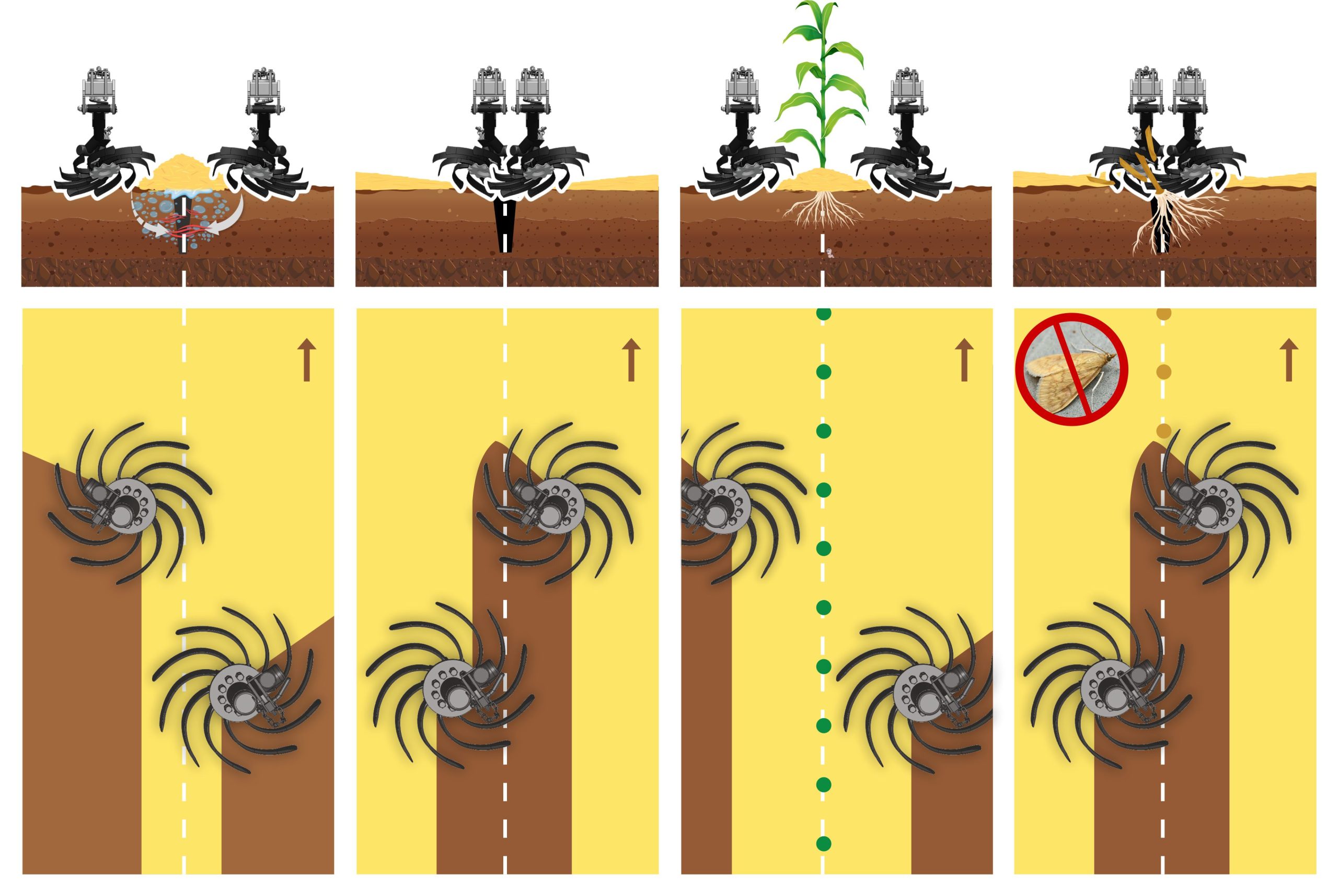
The really exciting part is that this system addresses one of the classic problems of the “strip cats”: they tend to leave a trench behind them. When we use the BUSA StripTill in combination with the GYMF Multi, the rotors cultivate alongside the strip at a steep angle, pulling surface residue onto the zone previously worked by the ripper shank. In doing so, they create something of a straw mulch, a warming bed, or even a localized compost windrow directly over the strip. That strip is then left to mature. The crop residues act as moisture traps, capturing condensation and helping to maintain moisture in the future seed zone. Before planting, the GYMF Multi is run once again as a strip refresher directly along the seed row. This opens up the now mature, residue-free, biologically active soil, creating an ideal seedbed for the planter.
Since the machine can be mounted both at the front and rear of the tractor, mounting it on the front leaves the rear free for the seed drill to follow immediately behind. And here comes the real game-changer: one of the biggest challenges of both no-till and strip-till farming is their reliance on herbicides. If something in the system doesn’t quite work as planned, weeds quickly become a problem. When crop residues remain intact on the undisturbed soil surface, there is no conventional mechanical weeding tool that can effectively deal with the weeds underneath. The only machine that can do the job is the BUSA Rotary Hoe Inter-row Cultivator. You might think: “If only we had one! But surely we can’t start a whole new farming system by investing in yet another inter-row cultivator.” Well, actually, you can! By reconfiguring the GYMF Multi, it can also be used to mechanically weed between the rows.