Starting a technical article with the weather or drought is unbearably dull — yet unavoidable. In Hungary, irrigation is no longer a tool that promises extra security or higher yields; it has become the very condition for survival. Almost overnight, we have been forced to master an entirely new system: a form of water management where every single drop must count. While countries to our south have been refining these methods for decades, we now have to catch up at breakneck speed — and adopt solutions that truly work under our local conditions.
Why isn’t it enough to stay on the surface?
Traditional surface‑level irrigation methods — whether reel systems, linear machines or even surface drip — face serious limitations in vineyards. Evaporation losses are enormous; a significant portion of the water disappears into the atmosphere long before the plant ever has a chance to access it.
A vivid example comes from one of our partners, who used surface drip irrigation across four zones, running each zone for six hours. After installing soil‑moisture probes, he was shocked to see that despite the system operating as intended, the soil’s water reserves were steadily declining — even in spring. Following a friend’s advice, he switched to 24‑hour irrigation intervals, and the moisture curve finally began to rise. The explanation lies in basic physics: with surface application, the top layer dries out quickly in the heat. If you apply only 10 mm of water, all of it evaporates. If you apply 40 mm, the first 10 mm are still ‘lost’ to evaporation, but the remaining 30 mm can infiltrate deeper and accumulate. Even with conservative estimates, it’s clear that with surface irrigation, roughly half of the applied water is lost before it can benefit the crop.
The Advantages of Deep Drip Irrigation
The solution lies in installing the pipes 30–50 cm below the surface. The technology itself is not new, but in Hungary it has been used far less frequently — until now. With deeply placed emitters, we ‘pull’ the root system downward. While surface irrigation keeps the roots near the topsoil — where an extreme heatwave can dry them out — plants trained to root deeper become far more resilient. Evaporation losses are minimal; even the smallest amount of applied water has real value, because the moisture reaches the roots directly, where the drying effect of the hot, desiccating air no longer applies.
It is worth noting that this type of irrigation requires thorough preparation, as the pipes remain underground for up to ten years, and therefore demand more advanced filtration and water treatment. At this point, it becomes essential to think in terms of complete systems — including buffer ponds. A properly sized reservoir allows the water to settle and oxidize, but even more importantly, it protects the region’s water resources. By filling the pond continuously with small pumps, we avoid placing sudden, heavy demand on canals or groundwater layers during the hottest days. This is an investment that pays back even faster when neighbouring farms join forces and share the infrastructure.
Installation Efficiency: The BUSA Solution in Practice
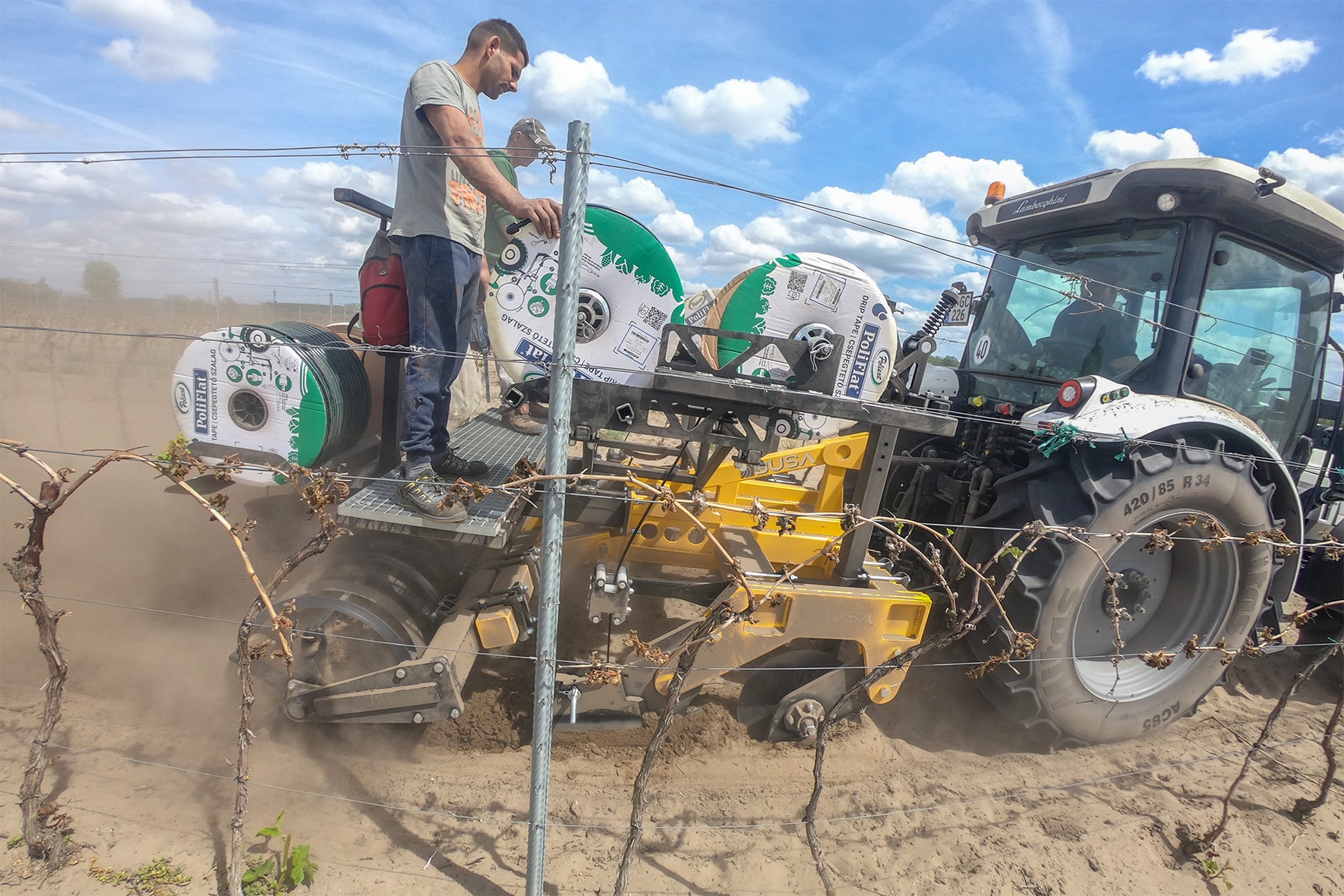
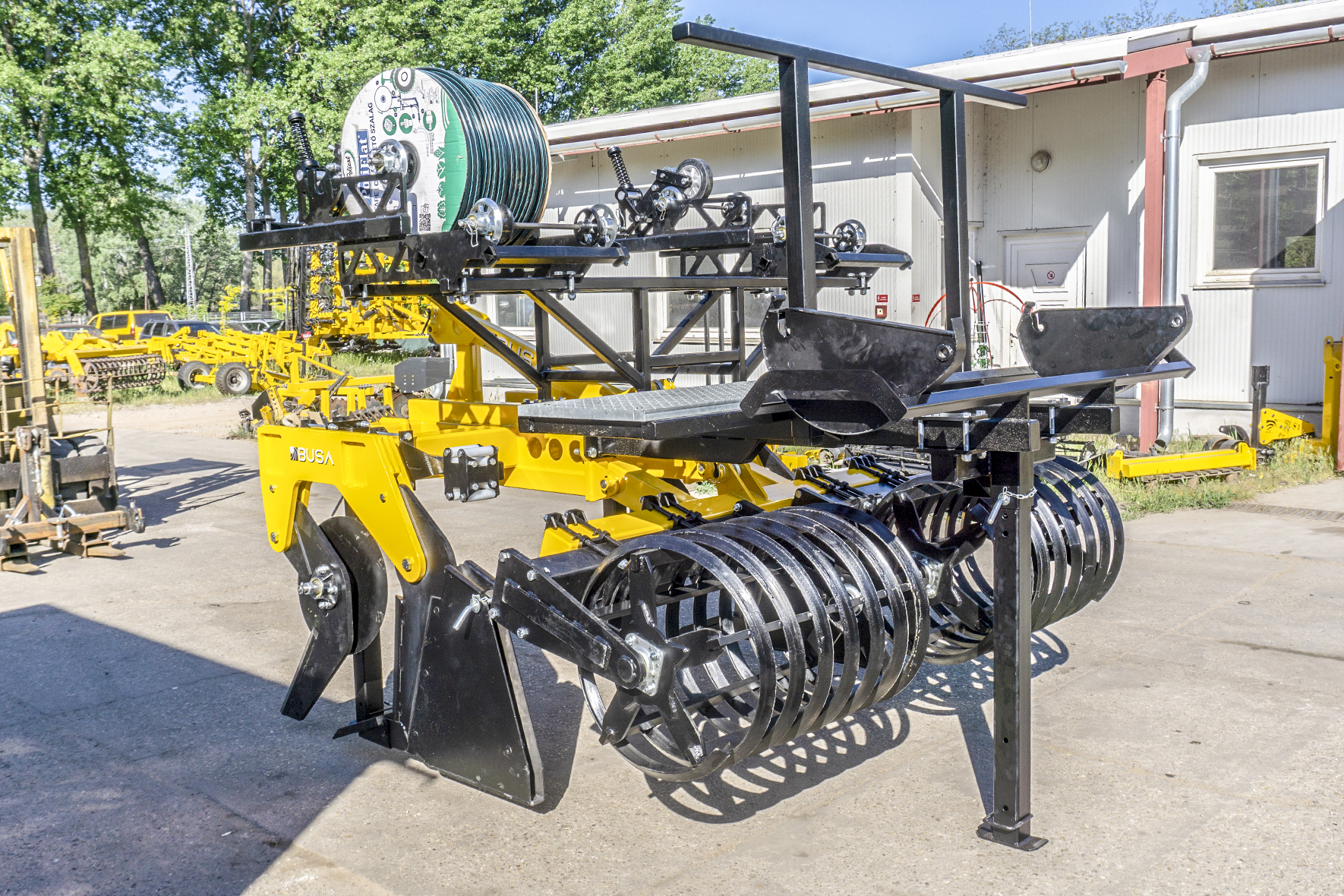
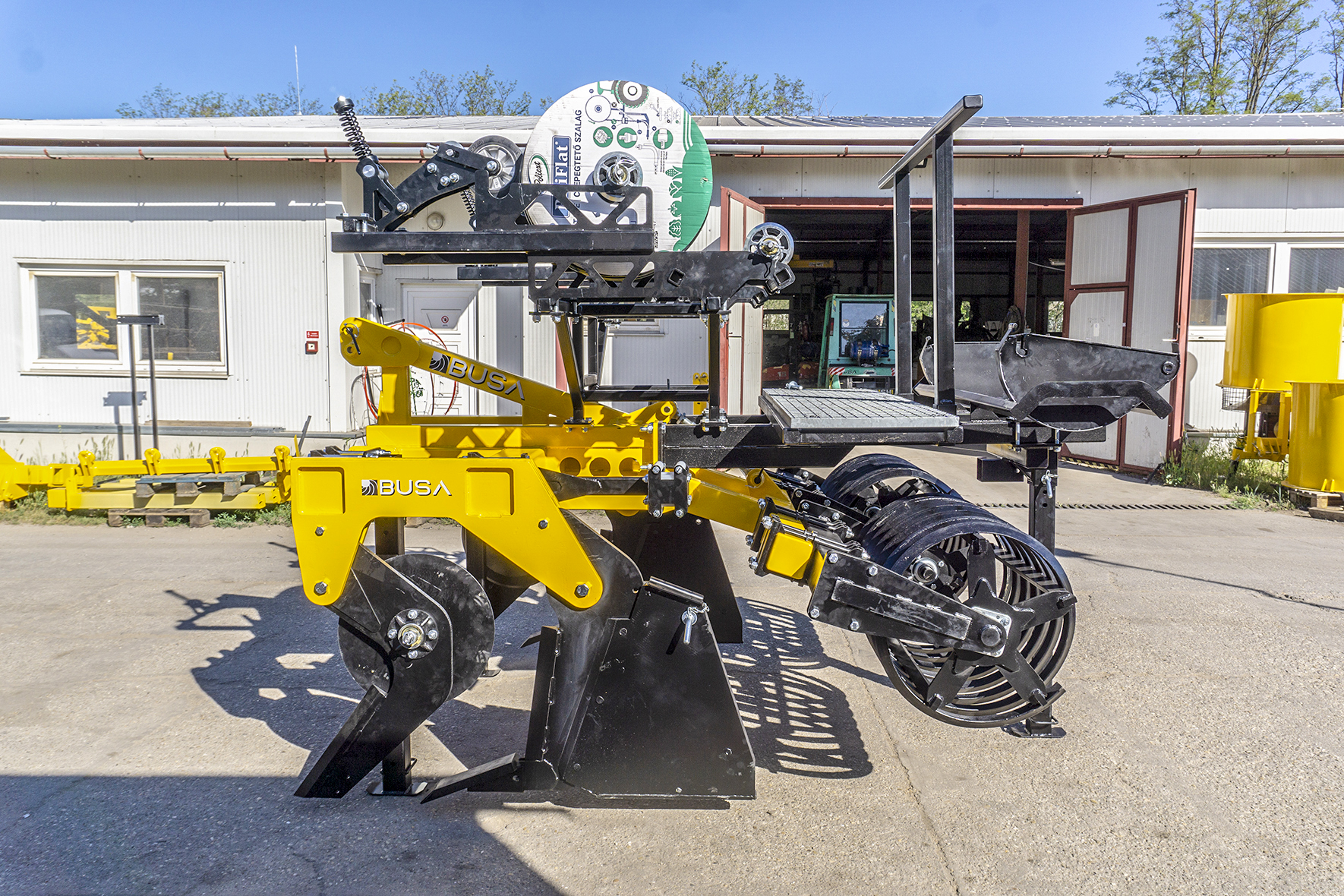
Building such a system is a significant investment, which is why BUSA Bt. focused on the point where costs can be reduced most effectively: the installation itself. We developed laying machines that radically reduce draft power requirements. While many tools on the market often need more than 100 HP per shank just to reach a depth of 30 cm, BUSA machines operate reliably below 40 cm — with a draft requirement of only 50 HP per shank.
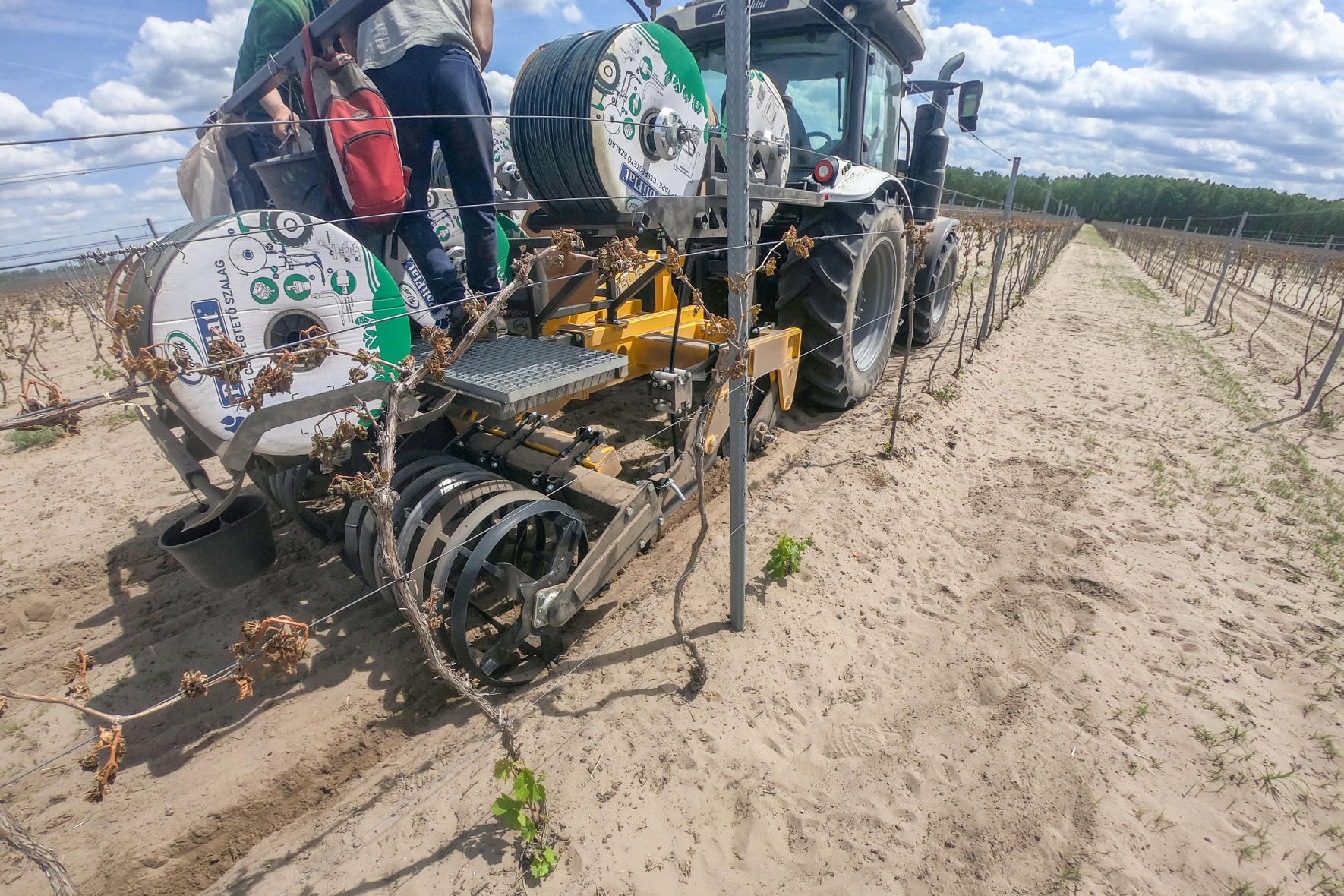
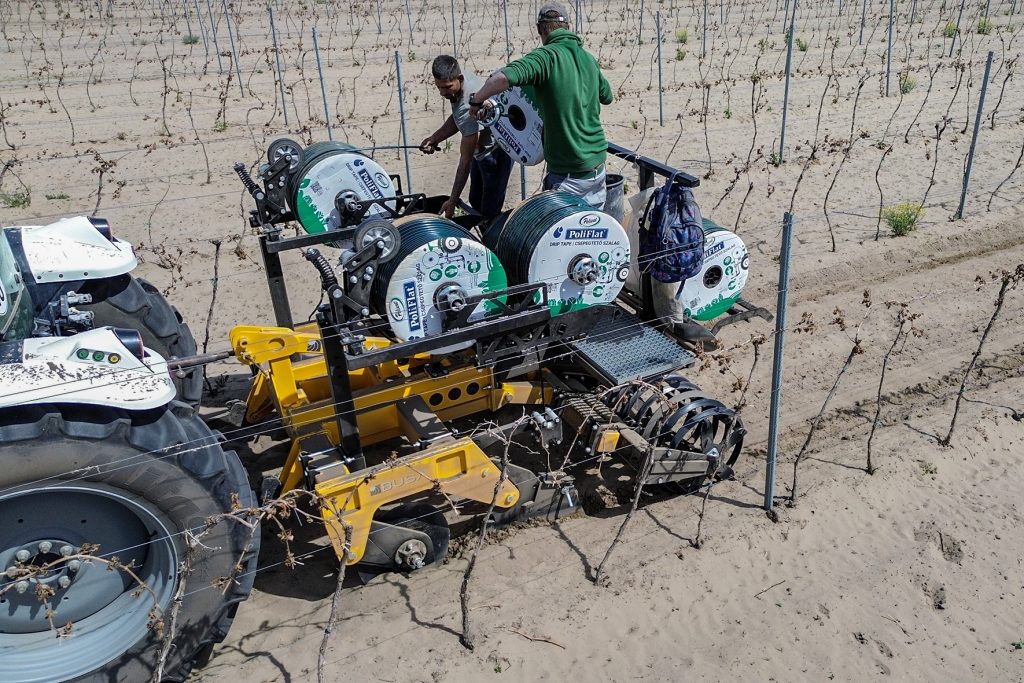
We recently commissioned our newest two‑row pipe‑laying machine in a vineyard, where the design once again proved itself in real‑world conditions. A 110 HP tractor pulled the machine comfortably, without strain, at the required depth. What stood out even more, however, was the logistical efficiency: the headland turns and drum‑changing process — often the biggest source of downtime — consistently stayed under 60 seconds.
When a drum runs out in 5–6 minutes, it makes a world of difference whether the changeover takes four minutes or just 45 seconds. Even on their ‘warm‑up’ day, this team laid 7 hectares, and on the second day they easily completed the first 15‑hectare phase. This pace — combined with the reduced tractor power requirement — is what allows the investment to start giving the grower breathing room, and water, as quickly as possible.
We are continuously developing new versions of our machines, and we have also launchedour rental program. For growers working around 100 hectares, purchasing the machine is the rational choice; but for those with smaller areas, where installation only takes a few days, the rental option offers a far more economical solution. It is worth consulting with us already in the system‑design phase, as the available machines — and those currently under development — can significantly influence the optimal layout.
Our goal is shared: to build, as efficiently and as rapidly as possible, the irrigation infrastructure essential for the survival of crop production in Hungary.