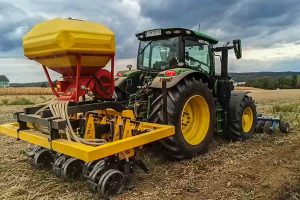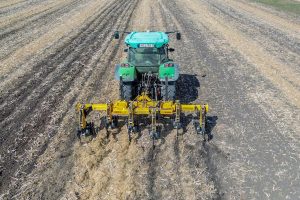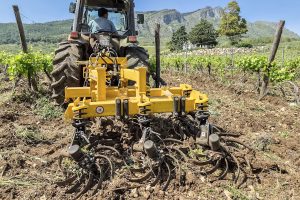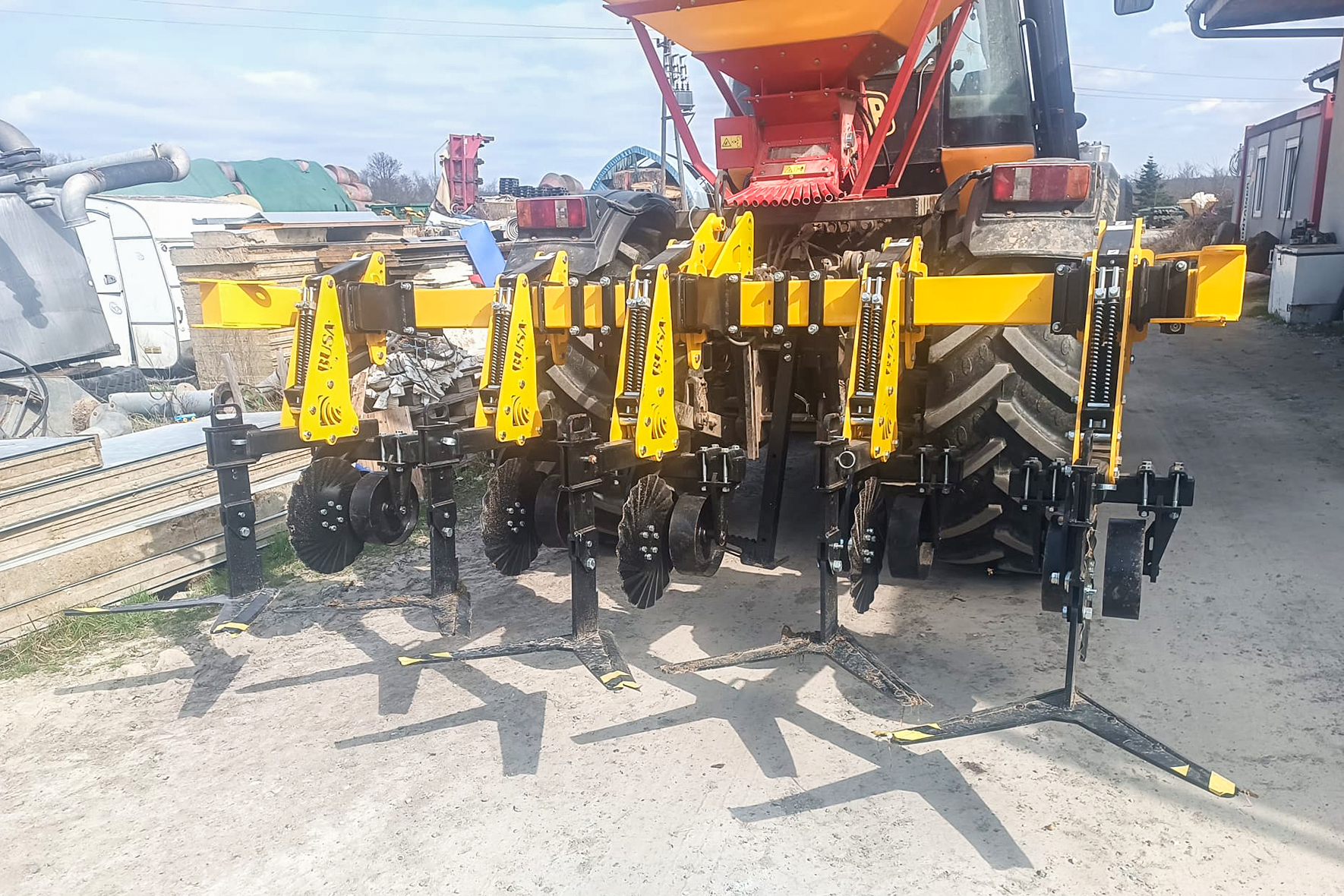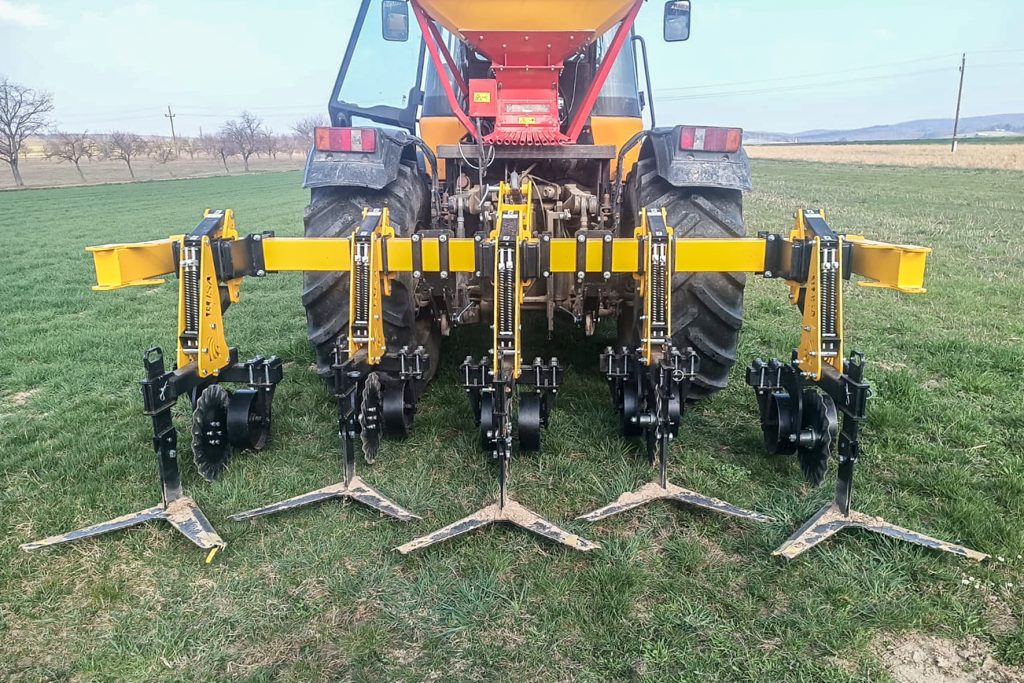
We were looking for a solution for shallow stubble cultivation, but we needed something that cuts through the entire stubble surface — tall stubble, heavy residue, even green regrowth.
The elephant‑sized part of the challenge is the crop residue wrapping around the tines. It’s a self‑reinforcing problem: if we want to cut through the entire surface with many tines, we need to place those tines in many rows. But if we want to work shallow, the machine must be levelled both crosswise and lengthwise — otherwise it won’t hold an even depth.
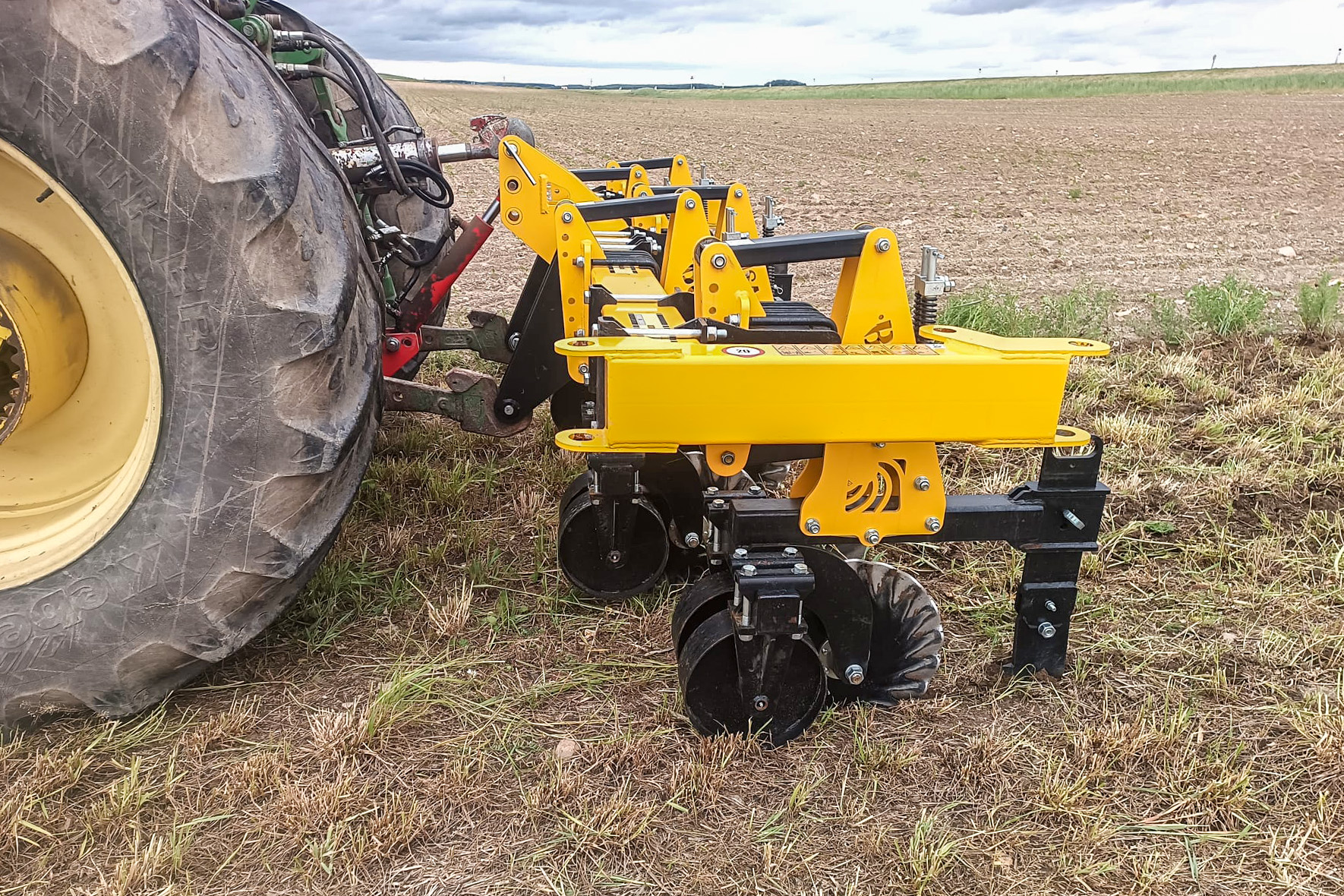
So we built a winged‑shank monster — which surprisingly turned out quite small. 80 cm shanks on a 75 cm spacing, each shank on its own parallel‑linkage carriage, with a leading coulter and front depth control. DONE! Its weight and draft requirement are roughly the same as a row‑crop cultivator fully loaded with fertilizer.
We named it VrootR, referring both to its task and its shape. Its function is not classic 10–15 cm stubble cultivation; it is much more about plant‑stand termination.
There are two main concepts you need to understand. The first is that plants can only be fully terminated if you cut them at the root collar, right below the soil surface. If you cut higher, they regrow; if you cut deeper, enough root remains for the plant to anchor itself and re‑root. This is why extremely precise depth control is essential — and why we want to work very shallow.
The other key concept is keeping the root zone undisturbed. From a soil‑improvement perspective, the below‑ground parts of plants are extremely important. Ideally, we want to leave the developed root zone intact — obviously without allowing regrowth. The roots form a network throughout the soil, improve infiltration (water penetration), reduce erosion (the destructive effect of wind), prevent surface sealing, and maintain soil structure.
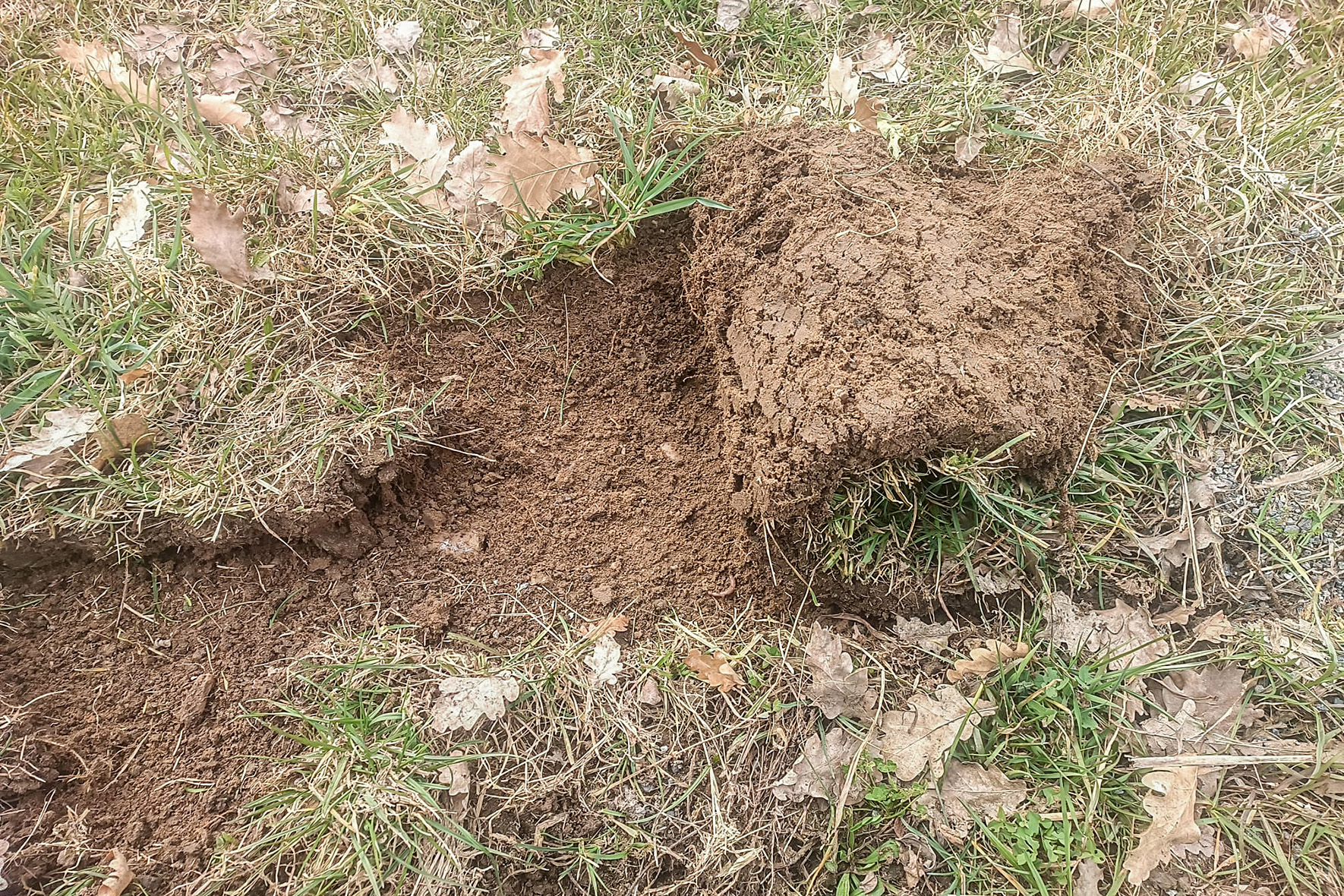
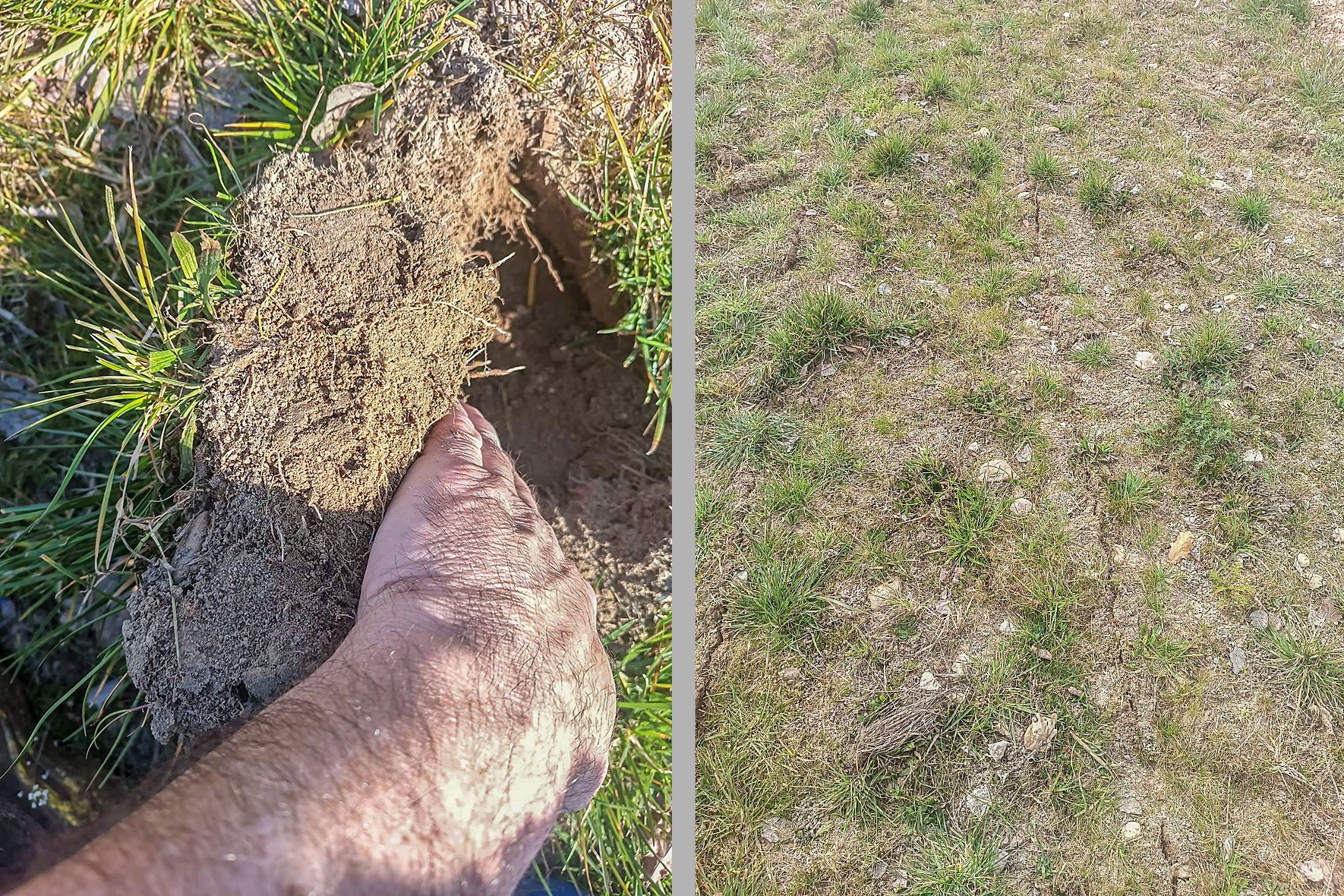
We wanted to do stubble cultivation, but we tried it early spring on grassland as well. We were curious about its resistance to clogging, and it performed exceptionally well. It holds its depth and just shaves the surface. After a bit of brainstorming, it evolved into a concept for organic No‑Till (well, not exactly No‑Till, but you know…), and organic strip‑tillage.
Organic No‑Till doesn’t really exist as such, because if you don’t use chemicals but also don’t touch the soil — not even a little — you won’t get a cash crop out of it; everything else will outcompete it. So let’s call it Min‑Till. (And no, mowing only kills plants when you don’t want them to die; if you try to terminate with mowing, the whole field will be flowering again in two weeks.)
We ran tests and got excited. We also designed smaller shanks, because with those you can already start playing organic strip‑till. The next prototypes will be 55 cm and 35 cm, spaced at 75 cm. From one angle, one of them is basically an inverse row‑crop cultivator, leaving only 20 cm strips alive, while the other leaves roughly a fifty‑fifty pattern.
To celebrate this, we’re building another machine for testing and demo purposes. Six carriages, 4.5 m working width, mounted, with hydraulic folding.
Interested? You can sign up for testing — either for stubble work or for termination.